
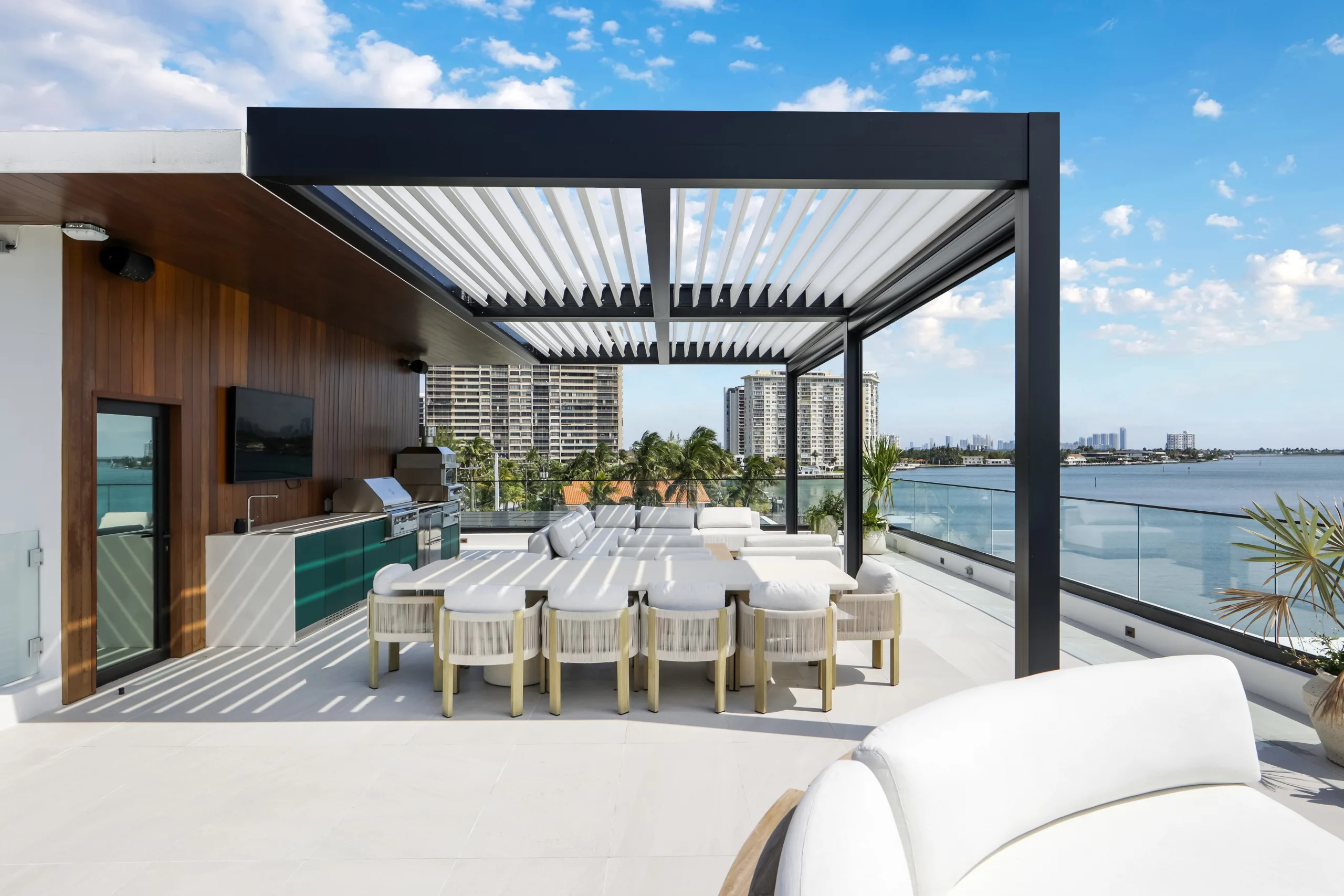
A motorized pergola is an investment in how you use and experience your outdoor space. But with so many systems on the market, it can be hard to know what to look for before you decide. Beyond the design itself, important details like structural engineering, material quality, customization, installation and long-term support can make a significant difference in the finished project.
Azenco Outdoor’s R-BLADE™ motorized louvered pergola is designed with these considerations in mind, combining precision engineering with customizable configurations and integrated features. Whether you’re considering R-BLADE™ or comparing other motorized pergola systems, here are seven things to evaluate before choosing the right solution for your home.
Table of Contents
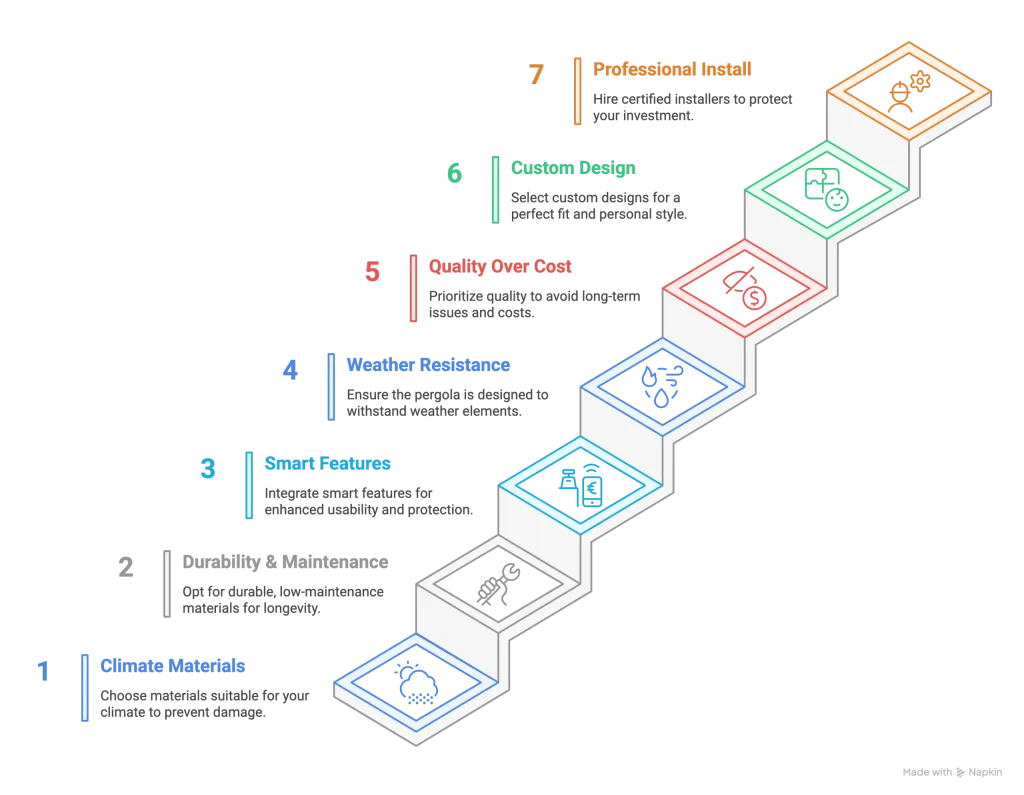
1. Structural Engineering and Materials
The frame carries the roof, the motors and every accessory you add, so start there. Aluminum is a common choice for motorized systems because it doesn’t rot, warp or need staining. It also doesn’t rust like steel does, although in salt air the finish does much of the protective work. Wood and vinyl are used for traditional pergolas, and our pergola buying guide compares those materials.
Two details are worth checking. The first is how the frame is made: extruded aluminum profiles are formed to consistent shapes and wall thicknesses, which affects how the structure spans and how parts fit together. The second is the finish. Powder coating protects the aluminum from weather and UV exposure. If you live near the coast, ask what finish standard the coating meets and whether that is documented.
R-BLADE™ is built from extruded aluminum with a powder-coated finish and concealed hardware. Frame colors include white, black, dark gray, bronze and wood grain, plus custom colors. If you’re still deciding, our guide to choosing a frame color for a modern home walks you through matching versus contrasting.
2. Wind, Snow and Climate Requirements for Your Site
Your climate should shape both the system you choose and how it’s engineered:
- Coastal and hurricane-prone areas: wind ratings and product approvals come first.
- Northern climates: snow load determines whether the roof can stay in place through winter.
- Hot, sunny regions: shade, airflow and cooling accessories become priorities.
Manufacturers usually publish maximum ratings. Azenco Outdoor lists the R-BLADE™ at up to 190 mph for wind load and 100 lbs per square foot for snow load. It also holds Miami-Dade County NOA No. 25-0205.04, valid through March 20, 2030.
For more on what a Miami-Dade NOA covers, see How a Motorized Louvered Pergola Works.
3. Drainage and Water Management
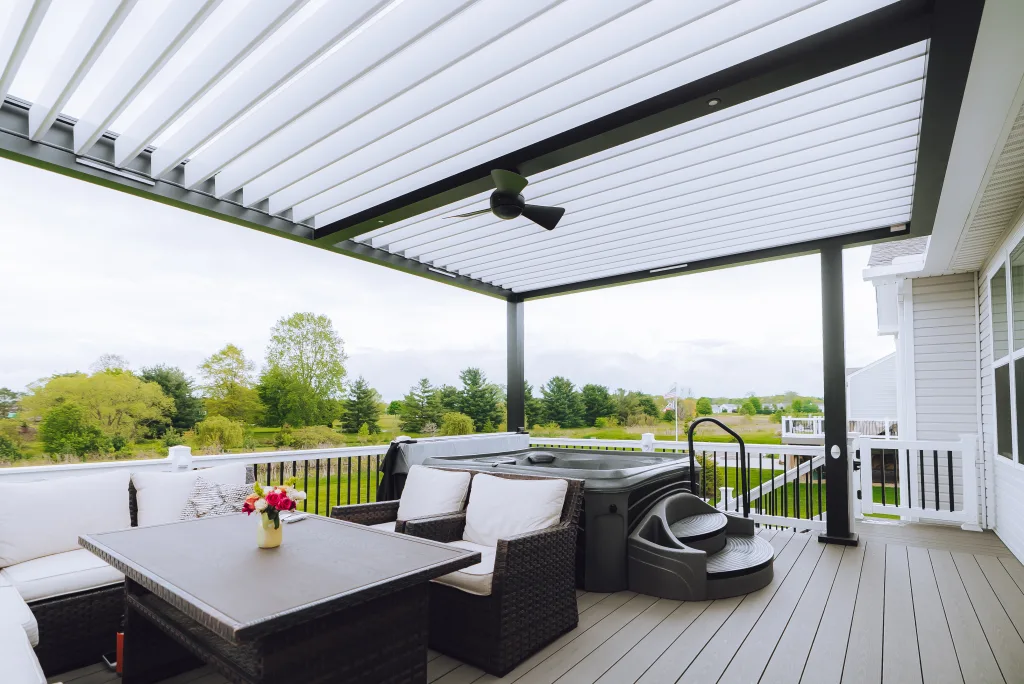
When a louvered roof is closed, rain runs off the louvers and has to be routed somewhere. Ask how water is collected from the roof and where it exits the structure. The answer affects where you place furniture, how you plan planting beds and walkways and whether runoff ends up against the house. If your yard already has trouble draining, these yard drainage solutions can help you plan where that water goes.
Also ask how the louvers close. On R-BLADE™, the louvers are designed to close without gaps, and runoff is collected by a gutter system built into the frame. A closed roof protects against rain from above, but the sides stay open unless you add screens or privacy walls. For more on how louvered roofs handle rain, read Are Louvered Pergolas Waterproof?
4. Dimensions, Spans and Custom Sizing
Before you talk sizes, measure the area you want covered and note where the doors, windows, walkways and furniture are. Then size the roof around how you will use the space. A dining table needs room for chairs to pull out, a lounge area may need shade that reaches past the seating and an outdoor kitchen needs clearance around the grill and counters.
A roof that’s too small leaves part of the seating in the sun, and one that only follows the edges of the slab can crowd doors or block a path.
The span, or how far the roof reaches between posts, determines how many posts you need and where they go. That affects views, traffic flow and furniture layout, so ask to see the post layout for your dimensions before you approve a design.
A single R-BLADE™ zone can be custom-sized up to 22’ 10″ x 16′. Larger areas use multi-zone layouts, and special cuts and angles are available for irregular footprints. For clearances, post height and room for fans or lighting, see our pergola height guide.
Thinking about upgrading your outdoor space?
Our brochure is packed with inspiration, design options, and key details to help you make the right choice.
5. Attached vs. Free-Standing Layouts
An attached, or wall-mounted, pergola extends from the house and creates a direct transition between indoors and out. Because the house supports one side of the structure, the wall, roofline and attachment point all need to be evaluated. Windows and doors can also limit where the beams can go.
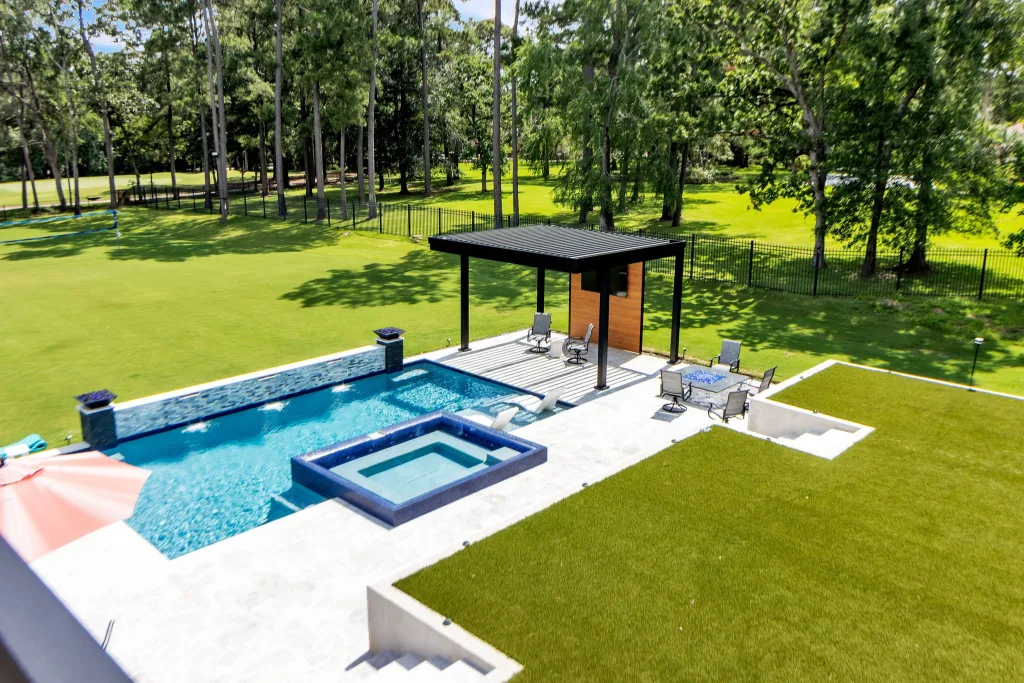
A free-standing pergola sits on its own posts and footings, so it can go beside a pool, at the far end of a yard or on a rooftop. You also have more freedom with orientation and sightlines.
Permit requirements can differ between the two. Our comparison of attached vs. free-standing pergolas covers the trade-offs in more detail. R-BLADE™ is available in both layouts, as well as multi-zone configurations.
6. Integrated Features: Lighting, Screens, Fans, Heaters and Misting
Accessories determine when the space is comfortable to use: after dark, on cool evenings or on hot afternoons. Choose them based on your climate and habits:
- LED lighting for evenings outdoors
- Motorized screens for shade and privacy on the open sides
- Fans for airflow on hot days
- Heaters for cooler evenings and shoulder seasons
- Misting and cooling systems for hot, dry climates
- Speakers for entertaining
These are optional on R-BLADE™, so plan them with the design. Most need power, and wiring is easier to run before the structure is finished. Ask which features can be added after installation and which have to be planned from the start.
7. Automation and Controls
Controls range from a single remote to full smart home integration. R-BLADE™ supports standard remote operation, but options like app control, smart weather sensors that close the louvers when rain is detected and smart home integration with voice commands are also available.
Not every option comes standard on every project, so ask which controls are included in your quote and which require additional components or setup. If you want the roof to respond while you’re away, make sure a rain sensor is part of the plan. It’s also worth asking whether the chosen accessories can be operated from the same app or smart home system as the roof. For a closer look at how the roof and sensors work, read How a Motorized Louvered Pergola Works, and for connected features, see What is a Smart Pergola?
Questions to Ask Your Dealer
Bring these questions to every quote you compare:
- What wind and snow load is my design rated for?
- Who prepares the engineering and drawings for my permit, and who submits the application?
- Where does water collect and exit the structure?
- How many posts will my layout need, and where will they go?
- Which controls and accessories are included, and which are extra?
- What does the warranty cover (structure, finish, motors and electronics), and for how long?
- Does warranty coverage depend on professional installation?
- How long will design, permitting and installation take?
- Who handles service and replacement parts after installation?
Azenco Outdoor works through a network of Azenco Outdoor Certified Dealers, including sales and installation. You can find a dealer near you to start the conversation.
Ready to bring your outdoor vision to life?
Tell us about your project, and our certified local dealer will provide a tailored quote with the best options—no commitment, just expert guidance.
Frequently Asked Questions
Is a motorized pergola worth it?
It depends on how you plan to use the space. If you want the option of full sun, filtered shade and a closed roof in rain, a motorized louvered roof gives you all three in one structure. If you only need permanent shade, a fixed roof may be enough. Our comparison of motorized, manual and fixed pergola louvers can help you decide.
What is the difference between a motorized pergola and a regular pergola?
A regular pergola has an open or fixed roof that stays the same. A motorized louvered pergola has louvers that rotate to open, angle or close the roof, and is operated by remote, wall control, app or sensors.
How much does a motorized pergola cost?
Price depends mainly on size, configuration, engineering requirements and accessories. Our guide to motorized pergola costs breaks down what affects the investment.
Plan Your Motorized Pergola With an Azenco Outdoor Certified Dealer
Once you’ve considered the details that matter most to your project, an Azenco Outdoor Certified Dealer can help you explore R-BLADE™ configurations, available features and the right solution for your property. Explore R-BLADE™, request a free quote or find an Azenco Outdoor Certified Dealer near you to get started.
2 Responses
Would like to speak to someone so see if what we need fits into our budget for our location in RI (but not near the ocean). 401-829-7766. (can’t seem to satisfy your “I am a human test”)
Hi, Bill! I just sent you an email 🙂