

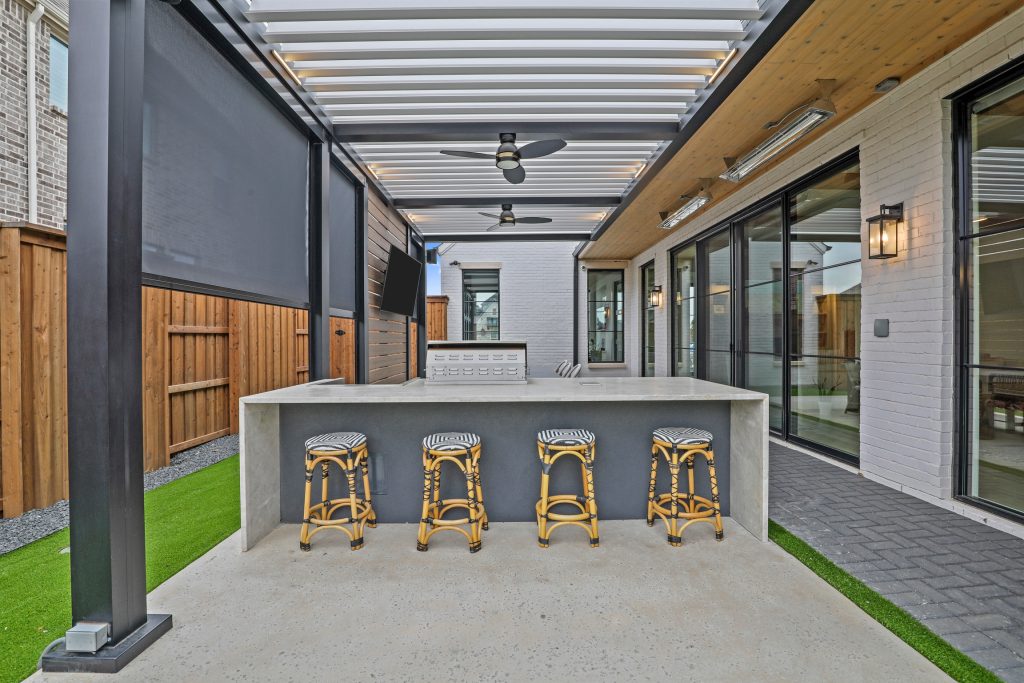
An extruded aluminum pergola does far more than provide shade. At Azenco, each one is made to measure and designed around the architecture of the home it serves, so it looks like part of the house, not an add-on. Clean lines, adjustable louvers and integrated features connect indoor spaces with outdoor living, all built for year-round use.
What sets a premium pergola apart lies beneath the finish. Profile geometry, wall thickness, connections and drainage determine how long a pergola stays rigid, quiet and leak-free. Knowing what to look for helps you tell a premium motorized louvered pergola from one that only looks the part.
Extruded vs. Cast vs. Sheet-Formed Aluminum: How Pergola Frames Are Made
Aluminum parts are made in three main ways. Extrusion pushes heated aluminum through a shaped die to create a continuous profile. Casting pours molten aluminum into a mold, and sheet forming bends flat metal into shape. A structural pergola frame needs consistent profiles and reliable connections, and extrusion delivers both.
For a homeowner, the payoff shows up in the finished structure. Hollow, engineered cross-sections carry heavy loads without bulky beams, so wide spans don’t need heavy-looking framing. Wiring, drainage and mounting points are built into the profile, which is how an Azenco system hides its gutters and cables instead of bolting them on. And because one profile does the work of several parts, there are fewer joints and fasteners to see, so the frame looks like part of the house.
How Extrusion Controls Wall Thickness and Profile Consistency
During extrusion, the die sets the profile shape, and controlled production keeps dimensions and wall thickness consistent along its full length. Beams, posts and louvers need that to fit together with tight tolerances, and it lets engineers predict how each piece will carry load.
Extrusion is only the starting point, though. Alloy, temper, cross-sectional design and quality control all affect a profile’s performance. The finished pergola’s strength comes from the whole system: the engineering behind it, how the parts are fabricated and joined, and how it’s installed.
Why Uniform Profiles Matter for Spans, Joints and Alignment
Long spans strain beams and connections. If a profile flexes too much, joints shift and louvers fall out of alignment. When dimensions are consistent, parts fit the way they were designed to, which matters most for motorized louvers that need to rotate smoothly and close evenly.
Good alignment also keeps the structure looking clean, with straight beam lines and uniform gaps. A properly engineered frame helps prevent misalignment over time.
Structural Performance: Wind Load, Snow Load and Span Capability
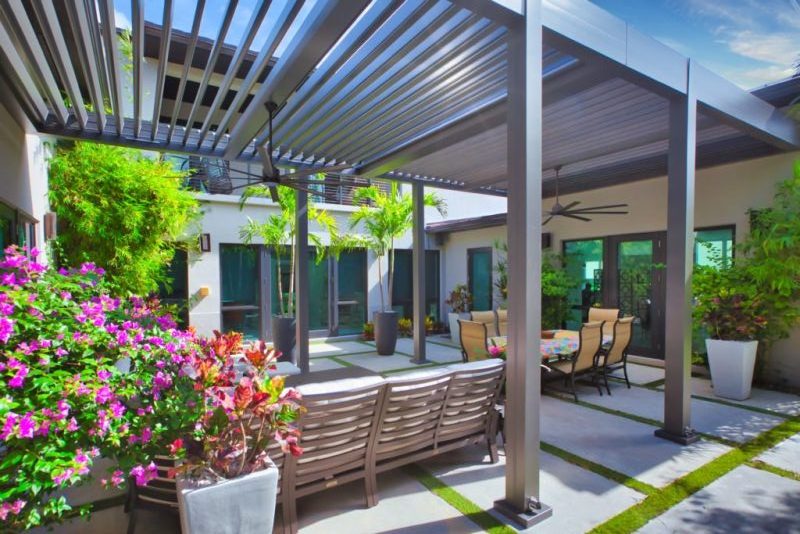
A pergola’s structural rating should be central to the selection process. Wind creates uplift and lateral forces, while accumulated snow adds downward pressure to the roof and supporting frame.
Engineers need to account for these loads when sizing beams, selecting connections and determining support locations. Span capability also depends on deflection limits, not simply whether a component can resist failure. Excessive deflection can cause sagging, stress joints and misaligned louvers.
The R-BLADE™ Motorized Louvered Pergola is specified for wind speeds up to 190 mph and snow loads up to 100 lbs per square foot. These figures are useful for projects that require substantial weather resistance.
Final ratings depend on site exposure, foundations, attachment details and local design requirements.
Integrated Design: Built-In Gutters, Concealed Hardware and Wiring Channels
A premium extruded aluminum pergola is defined by details that are often overlooked in early planning. Built-in gutters carry rainwater through the structure instead of relying on bulky external drainage. Concealed hardware keeps the beam lines clean, and internal channels hide power and lighting cables. Together, they deliver a cleaner look that still stands up to daily outdoor living.
The R-BLADE™ system combines motorized louvers with an integrated internal drainage system and concealed components. Depending on the configuration, integrated LED lighting and motorized privacy screens can extend the space’s functionality and help define distinct zones for dining, relaxing or entertaining. Coordinate electrical routing with the structural layout from the start to avoid exposed wiring.
Corrosion Resistance and Finish Durability on Extruded Aluminum Frames
Outdoor structures take constant abuse from moisture, sun, temperature swings and airborne contaminants. Extruded aluminum forms its own oxide layer that resists corrosion, and a good powder-coat finish adds protection and keeps the color even. The finish matters most near the coast and in other harsh environments.
Powder-coated extruded aluminum holds its appearance with little care. Azenco’s standard colors are white, black, gray and bronze, but custom colors are available to match any home’s exterior. You can also choose wood-grain finishes or combine colors in a two-tone look.
Durability still depends on the alloy, surface preparation, coating specification and installation. Scratches, chemical exposure and contact between dissimilar metals can shorten a finish’s life, so choose one best suited to the environment.
Maintenance Requirements Compared: Aluminum vs. Steel vs. Timber
Aluminum generally requires less upkeep than timber because it never needs staining or sealing. Routine cleaning keeps dirt and environmental deposits at bay, and moving parts, drainage channels and fasteners should be inspected per the manufacturer’s guidance.
Steel offers high strength and stiffness, but its coating must stay intact to hold off corrosion, and a damaged finish needs repair, especially in humid or coastal conditions. Timber looks warm and natural, but it weathers, cracks and soaks up moisture unless you keep up with it. If low maintenance matters, an extruded aluminum pergola gives you strength and durability without the upkeep.
Extruded Aluminum in Practice: How the R-BLADE™ Motorized Louvered Pergola Is Built
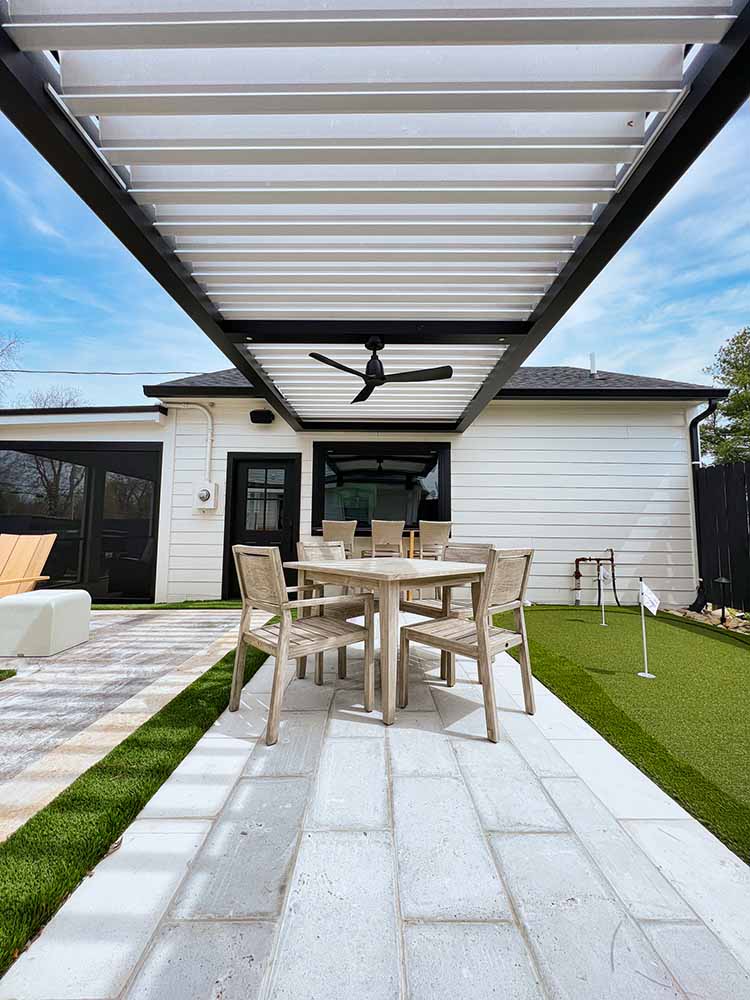
The R-BLADE™ Motorized Louvered Pergola shows how material selection and engineering work together. Its extruded aluminum frame carries a roof of gapless, dual-wall louvers that rotate up to 90 degrees to manage sun and airflow, then close tight against rain. Weather sensors can automatically shut the roof when it rains, and a built-in gutter and concealed hardware keep the lines clean, with no visible screws.
Every R-BLADE™ is made to order, whether wall-mounted, freestanding or multi-zone. A single zone can be sized up to 22’10” x 16′, and special cuts and angles handle awkward backyard spaces.
Add LED lighting, motorized privacy screens, fans, heaters or misting, and it becomes a complete outdoor living space, all controlled from an app, remote or wall control, with smart home integration.
Before final selection, review the load ratings, dimensions, finish options and installation requirements for your project.
Frequently Asked Questions About Extruded Aluminum Pergolas
1. What is the main advantage of an extruded aluminum pergola?
Consistency. Extrusion creates uniform profiles with complex cross-sections, which supports accurate assembly, strong structural design and built-in features like internal drainage channels.
2. Are extruded aluminum pergolas suitable for extreme weather?
They can be, if the complete system is engineered and rated for the conditions. The R-BLADE™ is specified for wind speeds up to 190 mph and snow loads up to 100 lbs per square foot. Confirm ratings against your project requirements before installation.
3. Do these pergolas require regular maintenance?
Only light upkeep. Clean the frame and louvers, clear debris from drainage channels and inspect moving parts and connections. Follow the manufacturer’s guidance for the finish, motor and accessories.
4. How does an extruded aluminum pergola manage rain?
When the louvers close, water is directed into integrated channels and gutters. In the R-BLADE™, an internal drainage system routes the water through the structure. Performance depends on correct installation and clear drainage paths.
5. Can this pergola be integrated with lighting and privacy screens?
Yes. Depending on the model and configuration, integrated LED lighting and motorized privacy screens can be included. Planning them early helps coordinate electrical routing and mounting details.
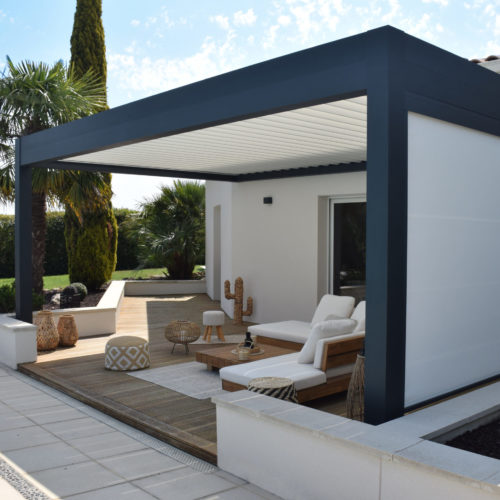
An extruded aluminum pergola is a long-term investment, and performance depends on more than looks. Consistent profiles, well-designed connections, effective drainage and durable finishes separate a well-engineered outdoor living space from a purely decorative one.
The R-BLADE™ Motorized Louvered Pergola brings these principles together in a system built for demanding weather and refined outdoor living. Explore configurations, request a quote or become an Azenco dealer. Review the specifications early to make sure the final design meets both your vision and your project’s performance requirements.