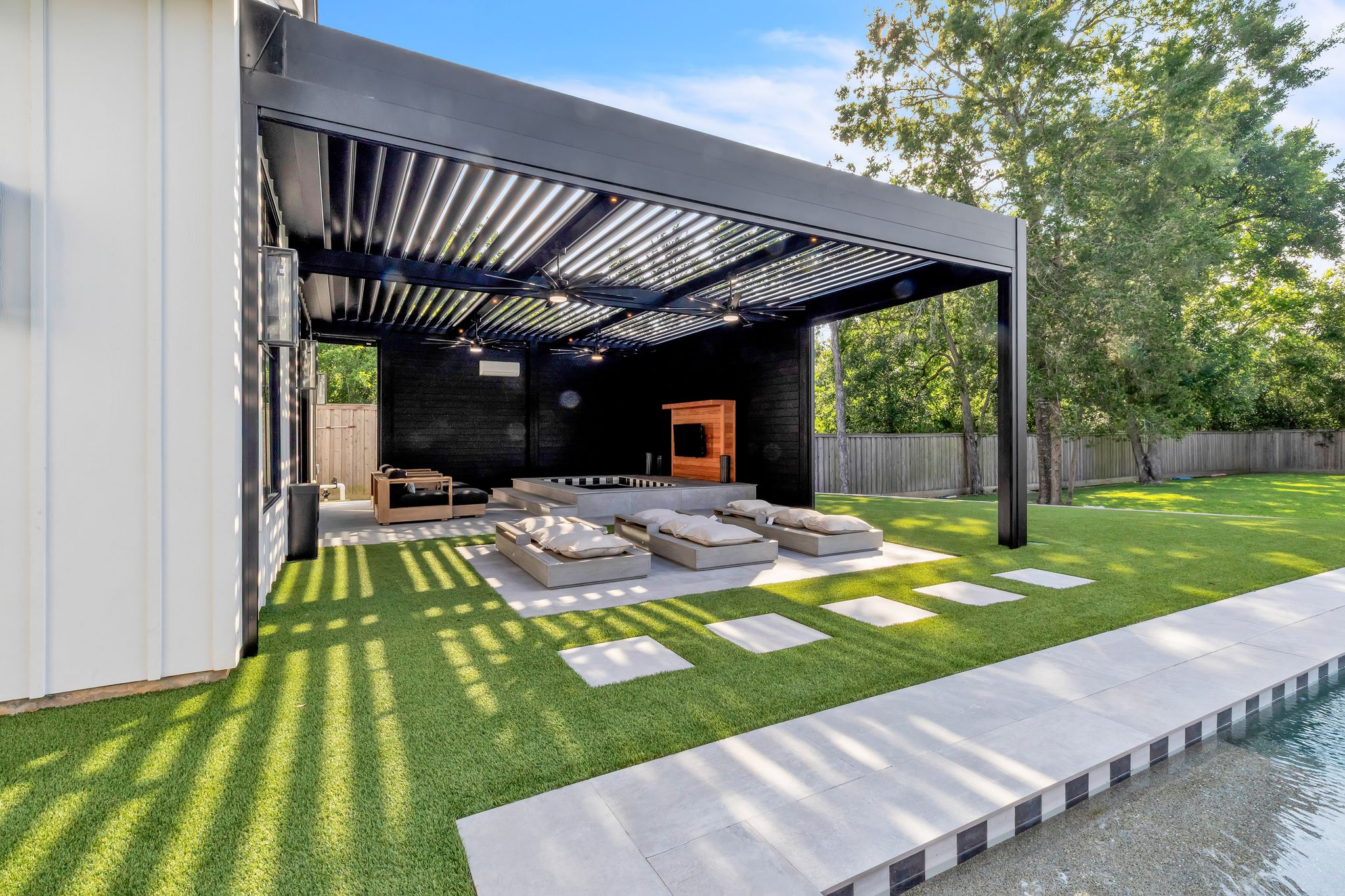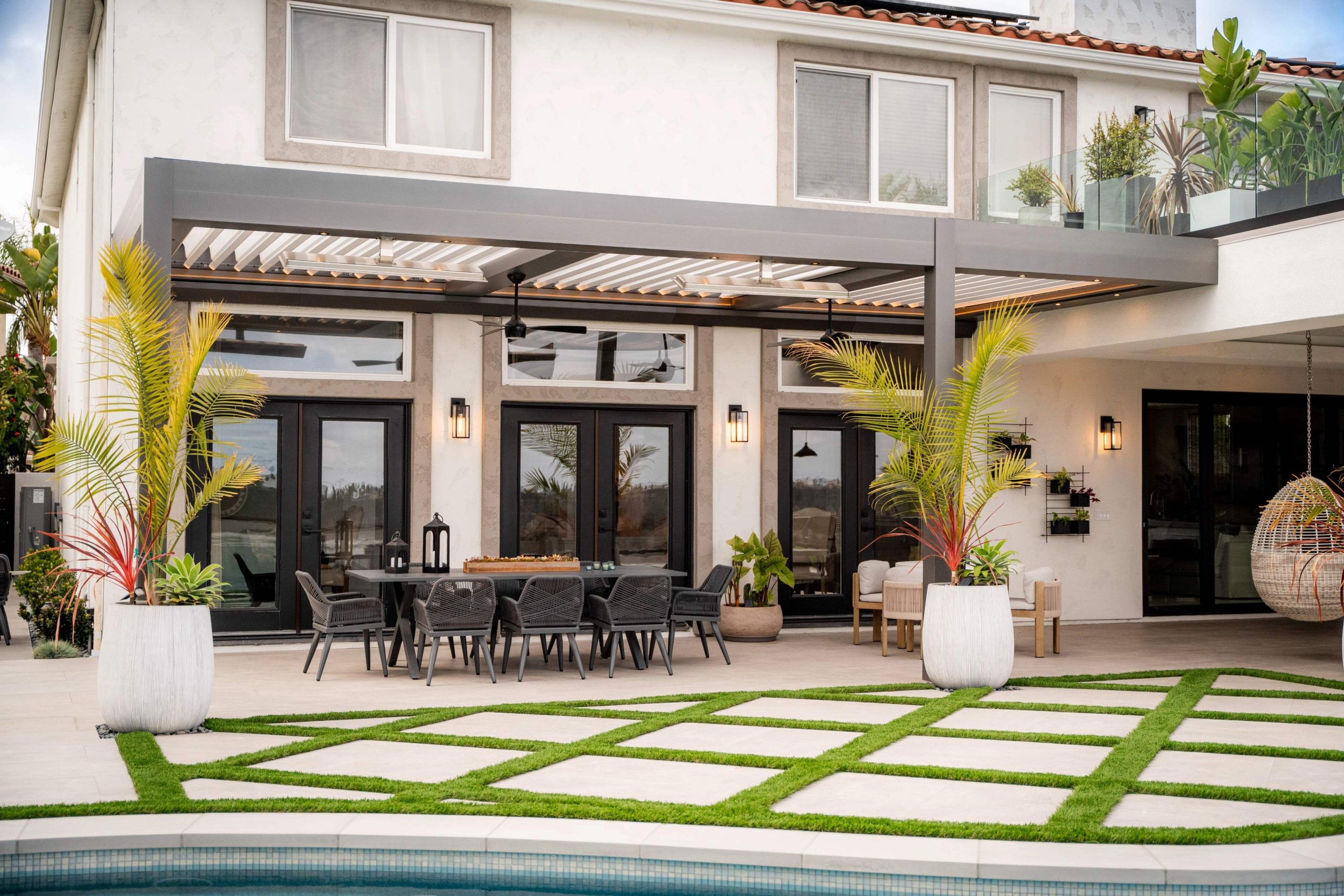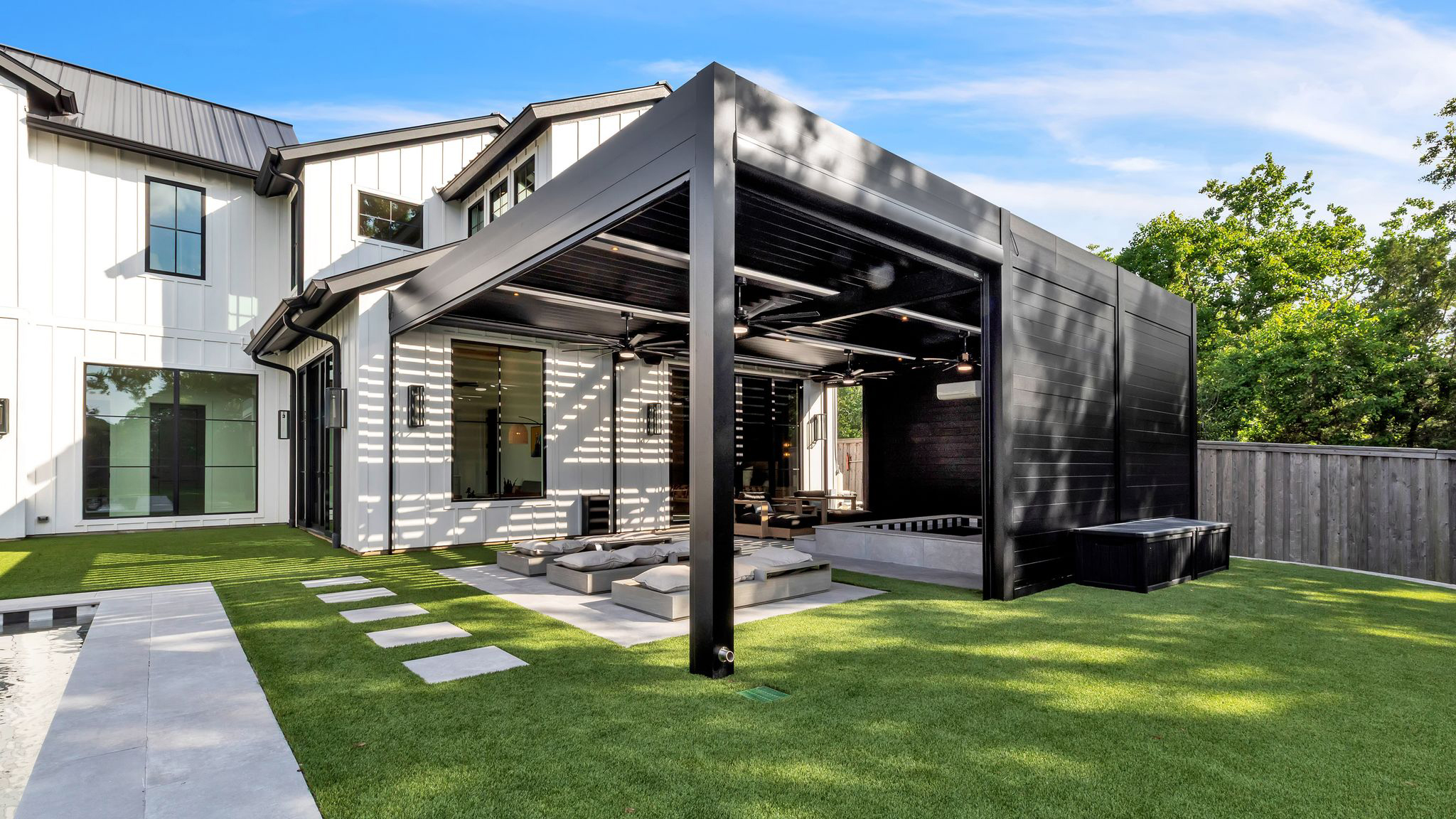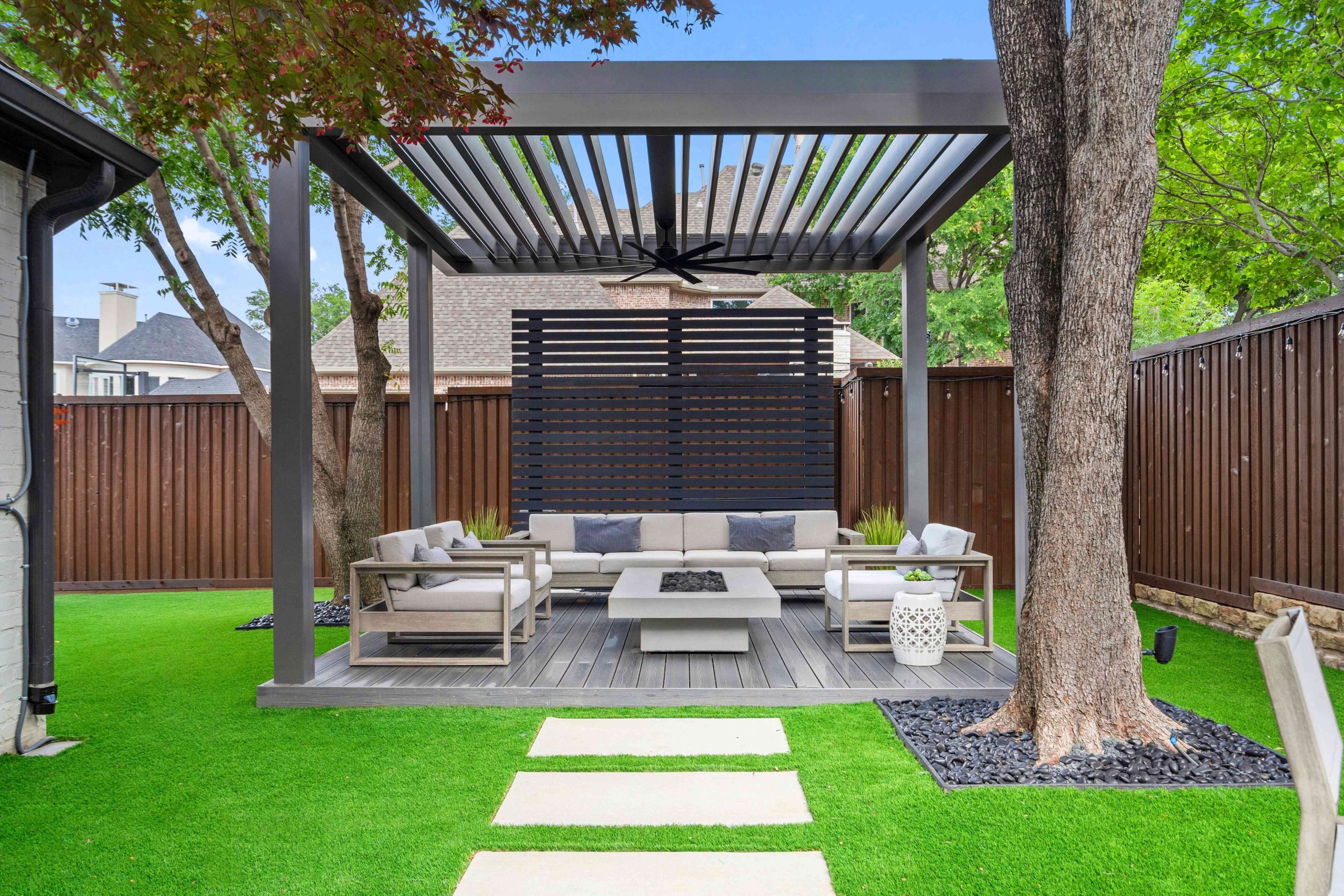
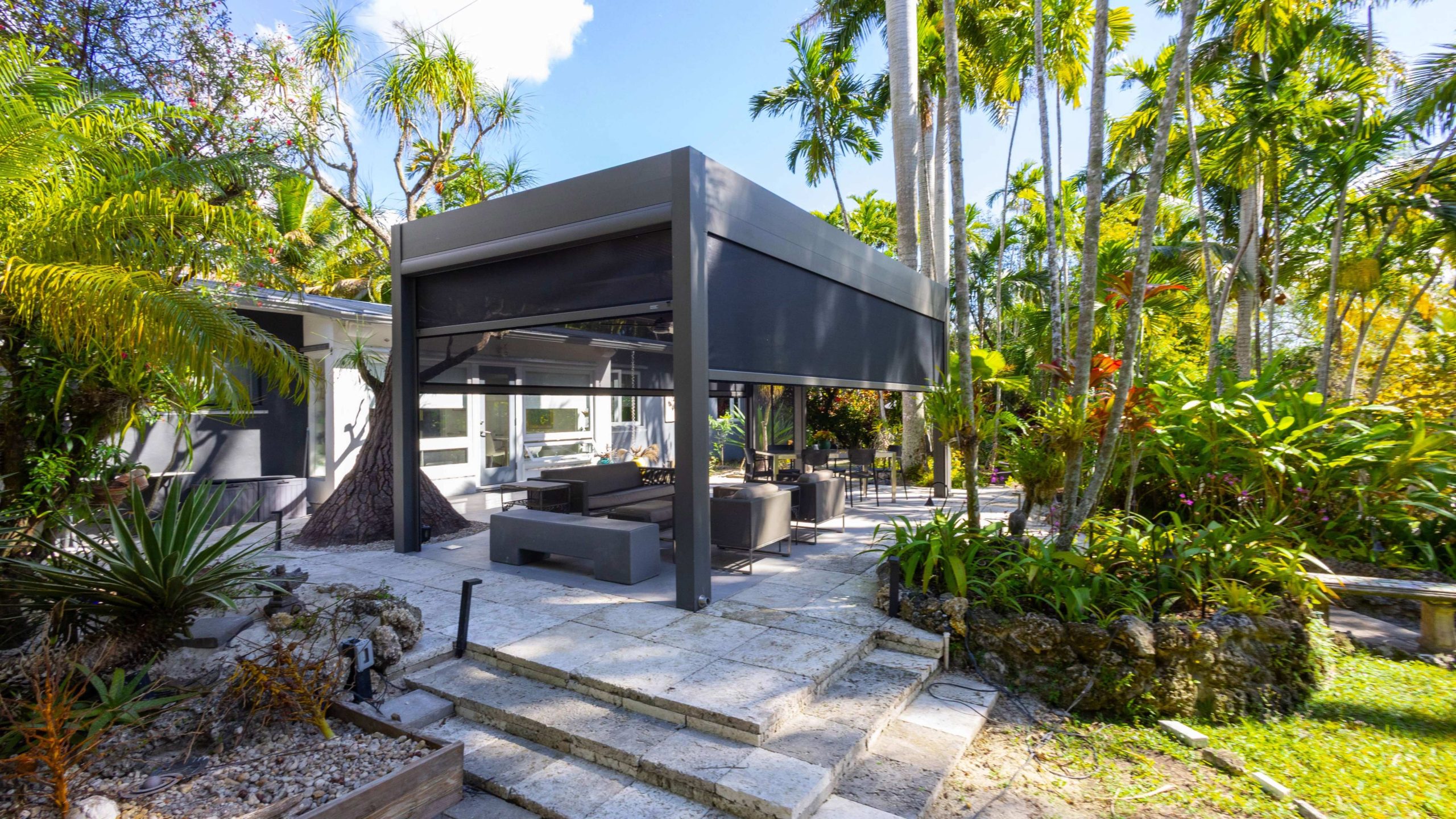
A screened porch is usually the better choice when you want a permanent, room-like extension with a fixed roof and screens that stay in place. A pergola with retractable screens is often the better fit when you want the space to open back to the pool, lawn, or garden when insects, glare, or privacy are not concerns.
Within the Azenco collection, Integrated Screens are designed specifically for R-BLADE™ and R-SHADE™. Pair them with R-BLADE™ when adjustable aluminum louvers are the priority, or with R-SHADE™ when you prefer a fixed insulated roof. In either case, the screens remain an outdoor comfort feature – not sealed walls, waterproof windows, or a shortcut to a conditioned four-season room.
The most useful question is therefore not which structure is universally better. It is whether your backyard should feel like a permanent screened room or an adaptable outdoor space.
| Decision factor | Screened porch | Pergola with Integrated Screens |
|---|---|---|
| Everyday feel | Permanent, defined outdoor room | Open-air structure with retractable boundaries |
| Roof | Usually fixed | R-BLADE™: adjustable louvers; R-SHADE™: fixed insulated panels |
| Screens | Usually remain in place | Motorized Integrated Screens raise and lower |
| Insect control | Consistent when screens and doors are intact | Available while the screens are fully lowered and openings are managed |
| Views and access | Screening stays visible | Screens can disappear for broader views and movement |
| Weather limits | Wind-driven rain can still enter through mesh | Screens are not waterproof walls; side exposure remains possible |
| Best general fit | Traditional attached extension and permanent furniture plan | Flexible lounge, dining, kitchen, pool, or entertainment zone |
A screened porch feels connected to the architecture of the house. The roof, framed openings, door, flooring, and furniture create a familiar transition between indoors and outdoors. That definition is helpful when the household wants a dependable place for reading, dining, or relaxing without deciding when to deploy the screens. It can also suit a traditional home where permanent columns, trim, and a matching roof feel natural.
The tradeoff is that the enclosure is always present. Screen walls continue to shape the view when insects are inactive, and a deep fixed roof can reduce daylight at nearby windows or doors. An attached porch may also involve meaningful foundation, framing, flashing, drainage, electrical, and permitting work. For a homeowner who values a stable layout, those commitments may be worthwhile; for someone who wants the yard to feel fully open on a mild day, they may feel restrictive.
A screened-in pergola with retractable sides creates a different rhythm. Raise the screens for an open connection to the pool or garden, lower one side for late-afternoon glare or a neighbor-facing view, or lower the appropriate sides when insects become active. This flexibility is especially useful when one patio moves between family meals, quiet lounging, and larger gatherings.
That flexibility still needs realistic expectations. Integrated Screens must be planned as part of a compatible structure, powered, operated, and maintained. If the real goal is permanent screening with a traditional room-like appearance, a screened porch may remain the simpler conceptual fit.
Integrated Screens are a built-in motorized screen solution developed for R-BLADE™ and R-SHADE™ – not a universal accessory for every Azenco product or every existing installation. The roof choice should come first because it determines how the space handles overhead sun, shade, and rain.
R-BLADE™ vs R-SHADE™ at a Glance
| Feature | R-BLADE™ with Integrated Screens | R-SHADE™ with Integrated Screens |
|---|---|---|
| Roof experience | Motorized aluminum louvers rotate up to 90 degrees | Fixed insulated roof panels |
| Best fit | A multifunctional patio that changes throughout the day | A dining, kitchen, television, or lounge zone that prefers constant coverage |
| Main benefit | Independent control of the roof and side screens | Predictable overhead shade with retractable sides |
| Main limitation | More moving components and electrical coordination | The roof does not open and may affect nearby daylight |
Choose R-BLADE™ when you want to open the roof for sky and sun, angle the louvers for shade and airflow, or close them for overhead protection. Choose R-SHADE™ when the patio should keep a consistent insulated roof but the side screens should disappear when they are not needed. Neither product should be presented as a replacement for a code-compliant interior addition.
Integrated Screens bring the screen housing, tracks, motorization, and controls into the design of R-BLADE™ and R-SHADE™. That creates a cleaner result than treating the screens as an improvised later addition. Depending on the selected mesh and project conditions, lowered screens can help manage insects, low-angle sunlight, glare, breeze, and privacy while preserving more visibility than a solid wall. For a broader look at materials and applications, see Azenco’s guide to outdoor patio screen options.
They do not make an outdoor space completely insect-proof. Protection depends on fully lowering the relevant screens, keeping the material and tracks in good condition, closing other openings, and managing entry through doors. Tears, gaps, open sides, and nearby standing water can all reduce the benefit. CDC guidance recommends maintaining window and door screens and removing water-holding containers where mosquitoes breed (CDC: Preventing Mosquito Bites).
Screens are also not storm walls. Wind-driven rain may pass through or around mesh, especially at exposed sides, and performance varies with wind direction, screen material, opening size, and installation. Outdoor furniture, flooring, televisions, kitchens, and other features should therefore be selected and located for an outdoor environment even when a roof and screens provide meaningful comfort.
For privacy, look beyond the word screen. Openness, color, lighting, viewing angle, and distance from the neighbor all affect visibility. A brighter interior may be easier to see from outside after dark. Review the chosen material from both directions in daytime and evening conditions before finalizing it.
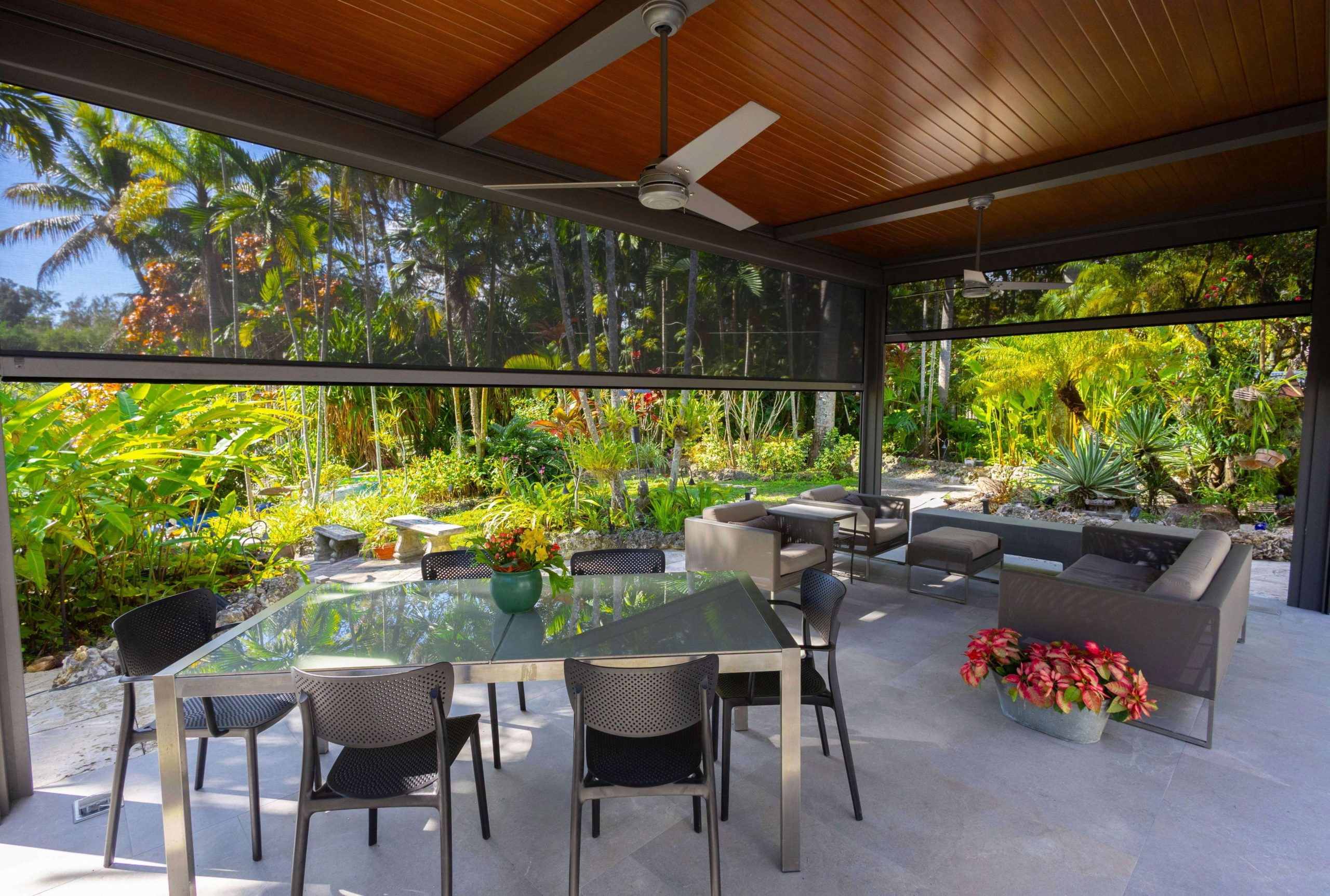
A conventional screened porch and R-SHADE™ provide constant overhead coverage. That predictability suits permanent furniture, dining, or an outdoor kitchen, although an attached fixed roof can shade adjacent rooms. R-BLADE™’s louvers can open for sunlight, angle for shade and airflow, or close for overhead protection. Because the roof and Integrated Screens work independently, homeowners can adjust the top and sides for the moment.
No screened option automatically becomes a sealed, conditioned, four-season room. Mesh walls are not insulated glazing, wind-driven rain may still enter, and portable heaters or fans do not change the building classification. A true four-season room generally requires a separately designed building envelope, insulation, windows and doors, heating and cooling, and approvals appropriate to habitable space. The 2024 IRC patio-cover appendix recognizes insect screening in qualifying openings but, where locally adopted, still treats those covers as recreational outdoor living rather than habitable rooms (ICC Digital Codes: 2024 IRC Patio Cover Provisions).
This distinction protects the homeowner from disappointment. A well-designed screened porch or screened pergola can extend outdoor comfort and make the backyard more enjoyable through more of the year, but it should still be planned, furnished, and described as an outdoor living space.
Our brochure is packed with inspiration, design options, and key details to help you make the right choice.
A screened porch is most often attached to the house, which makes it convenient for everyday meals and creates a direct transition from an interior room. The design should feel intentional from both sides of the wall: roof depth, framed openings, doors, and screen color can influence indoor daylight as well as the view toward the yard. Matching the home may create a seamless result, but it also brings the new roof, flashing, drainage, and structure into closer contact with the building envelope.
R-BLADE™ and R-SHADE™ can support attached or freestanding outdoor-living layouts, subject to project-specific design. An attached configuration can serve a dining area just outside the kitchen, while a freestanding structure can create a destination beside a pool, garden, or lawn without making every trip through a screened door. Freestanding does not mean foundation-free: the structure still needs appropriate support, anchoring, drainage, power, and local approval.
Choose the location that supports the household’s natural path through the yard. A technically possible structure can still feel awkward if a post blocks a view, a screen crosses the main route to the pool, or the covered area sits too far from the activities it is meant to support.
Begin with a simple sketch of where people will sit, cook, enter, and look. Then ask a qualified local professional to translate that lifestyle plan into a compatible structure. Prioritize the decisions that directly affect the experience:
These checks should support the homeowner’s priorities rather than turn the process into an engineering exercise. The goal is a customized outdoor space that feels right every day and performs as intended in its actual location.
Tell us about your project, and our certified local dealer will provide a tailored quote with the best options—no commitment, just expert guidance.
Choose a screened porch when you want permanent screening, a fixed roof, a traditional attached extension, and a furniture plan that stays defined. Choose R-BLADE™ with Integrated Screens when adjustable overhead light and maximum open-air flexibility matter most. Choose R-SHADE™ with Integrated Screens when you want a fixed insulated roof but prefer the side screens to retract.
If your real goal is a conditioned interior room, plan that as a separate building project. If your goal is a more comfortable outdoor space, start with how you want the backyard to feel, then let the roof, screens, and professional site review support that experience.
Find a certified Azenco contractor near you to compare the options for your home, climate, views, and everyday routines.
No. Azenco currently describes Integrated Screens as a built-in motorized solution designed specifically for R-BLADE™ and R-SHADE™. Confirm the exact configuration with a certified dealer during the original design process; do not assume universal compatibility or a simple retrofit.
A screened porch provides more consistent separation because its screens normally remain in place. A pergola with Integrated Screens can reduce insect entry while the appropriate screens are fully lowered, intact, and paired with good control of doors, gaps, and standing water. Neither option should be promised as completely insect-proof.
Do not treat mesh screens as waterproof walls. They may reduce some side exposure, but wind-driven rain can still enter through or around the screen depending on the material, weather, and installation. The roof provides overhead protection; the screens provide a different layer of comfort.
No – not by default. Integrated Screens, a roof, lighting, fans, or heaters can extend the useful season, but they do not create the insulated, sealed, conditioned, and code-approved envelope expected of a true four-season room.
A freestanding or carefully placed pergola often preserves a stronger visual and physical connection to the pool because its screens can retract. A screened porch may be better when the seating is directly connected to the house and the household wants permanent screening and a traditional room-like transition.
It may. Requirements vary with the structure, size, attachment, foundation, screens, electrical work, setbacks, climate loads, and local code adoption. Ask the authority having jurisdiction and any applicable HOA what must be approved before installation.

Leslie oversees sales and marketing at Azenco Outdoor, with a focus on modern outdoor living solutions.