Restaurant & Hospitality Pergolas: Spec Checklist to Increase Outdoor Dining Revenue
Last Updated on July 9, 2026
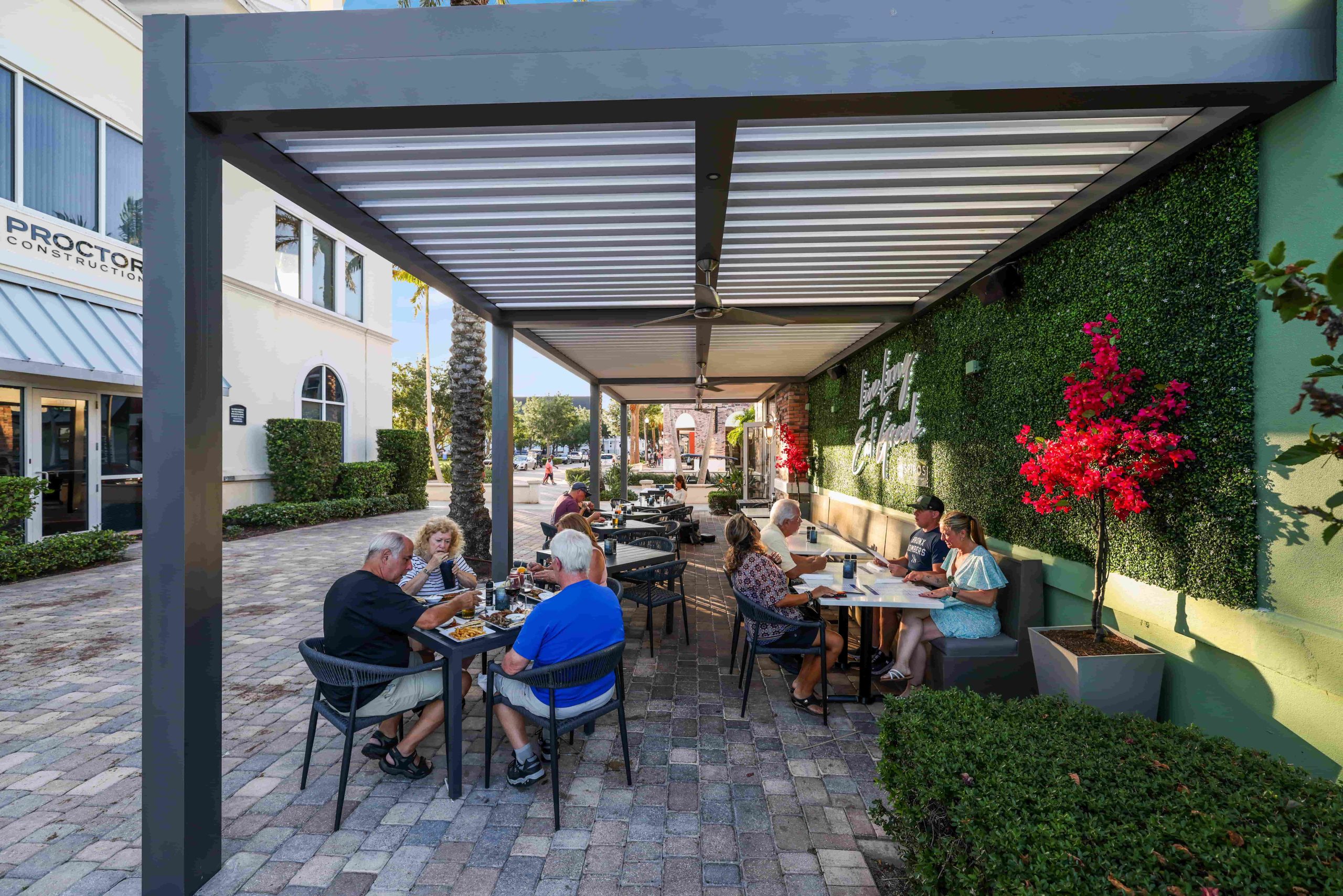
A restaurant pergola isn’t just “shade.” It’s a way to protect the moments that make guests stay longer: a calm lunch without glare, a dinner that still feels warm when the temperature drops, a rooftop that doesn’t turn into a weather gamble. The fastest way to spec a pergola that actually supports service is to decide four things up front: roof strategy, performance requirements, comfort stack, and an operations plan.
Start with Azenco’s hub for commercial builds: commercial shade structures. If your team needs quick clarity on basics (pergola vs patio cover, commercial suitability, etc.), bookmark Azenco Q&A.
The 60-second decision table
What “increase outdoor dining revenue” really means (no hype)
Revenue doesn’t come from a pergola “looking premium.” It comes from more usable seat-hours—more services you can run outside without weather, heat, glare, or discomfort cutting the night short. That’s why this post is built like a spec checklist: so your build decisions protect uptime and guest comfort, not just aesthetics.
For hospitality-specific context, use 5 reasons to invest in a pergola for your restaurant patio.
The Spec Checklist (copy/paste this into your project notes)
1) Space + flow (ops-first)
Before anyone debates louvers vs insulated panels, lock the operational layout.
- Seat inventory plan: which tables are “must-seat” nightly vs overflow?
- Server flow: make routes obvious (POS runs, bussing, tray paths). Avoid posts/screens creating pinch points.
- Host visibility: guests should understand where to go and where they’ll sit within 10 seconds.
- Zone design: dining zone ≠ lounge zone. Plan different lighting, music, and comfort needs.
- Edge conditions: neighbor lines, wind corners, street exposure, and noise boundaries all matter.
If you’re presenting to ownership, show flow diagrams—not mood boards.
2) Roof strategy (the decision that drives everything)
A) Motorized louvered roof (best for service-time control)
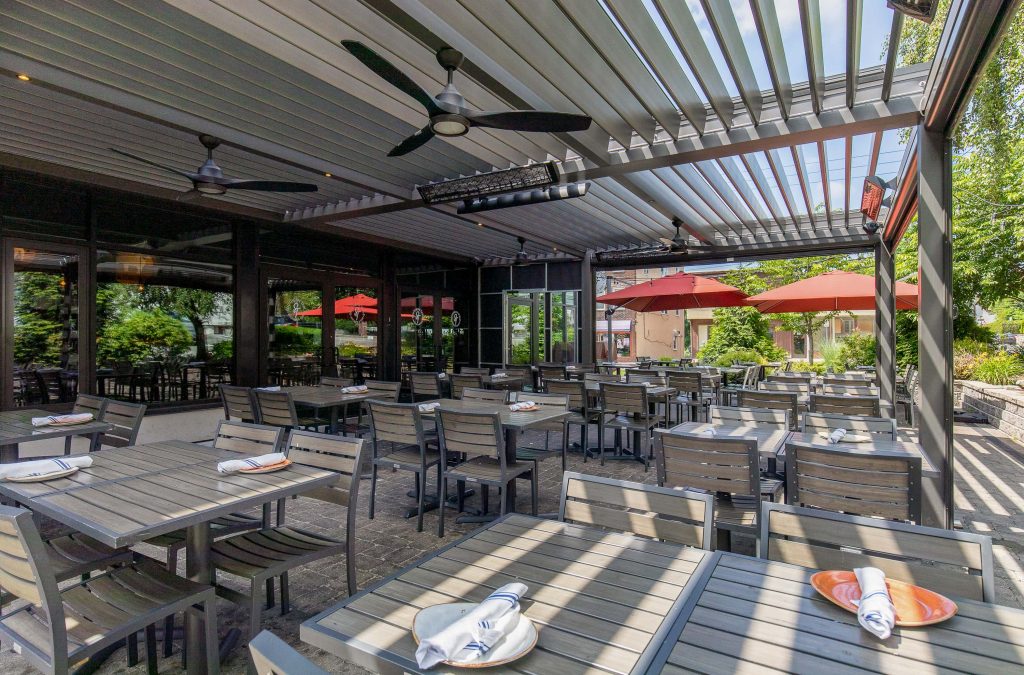
Choose this when you need to adapt—sun angle, passing showers, shifting wind, day-to-night transitions.
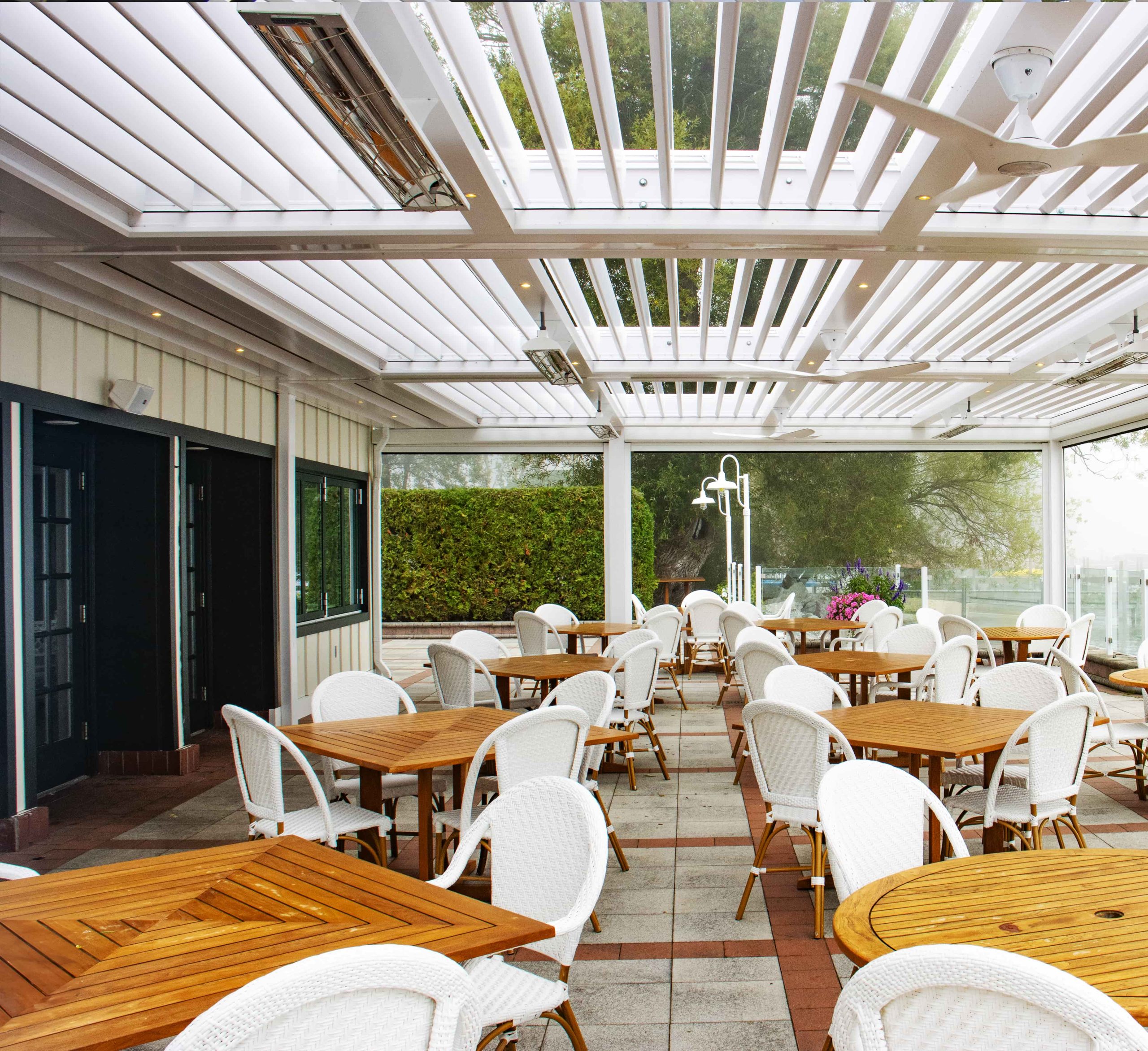
Best-fit: R-BLADE™ motorized louvered pergola
If stakeholders keep asking what “louvered” means: What is a louvered pergola?
B) Fixed slatted roof (best for simplicity + open-air vibe)
Choose this when you want architectural shade with minimal complexity and fewer systems to manage.
Best-fit : R-BREEZE™ slatted roof pergola
C) Solid insulated roof (best for consistent comfort)
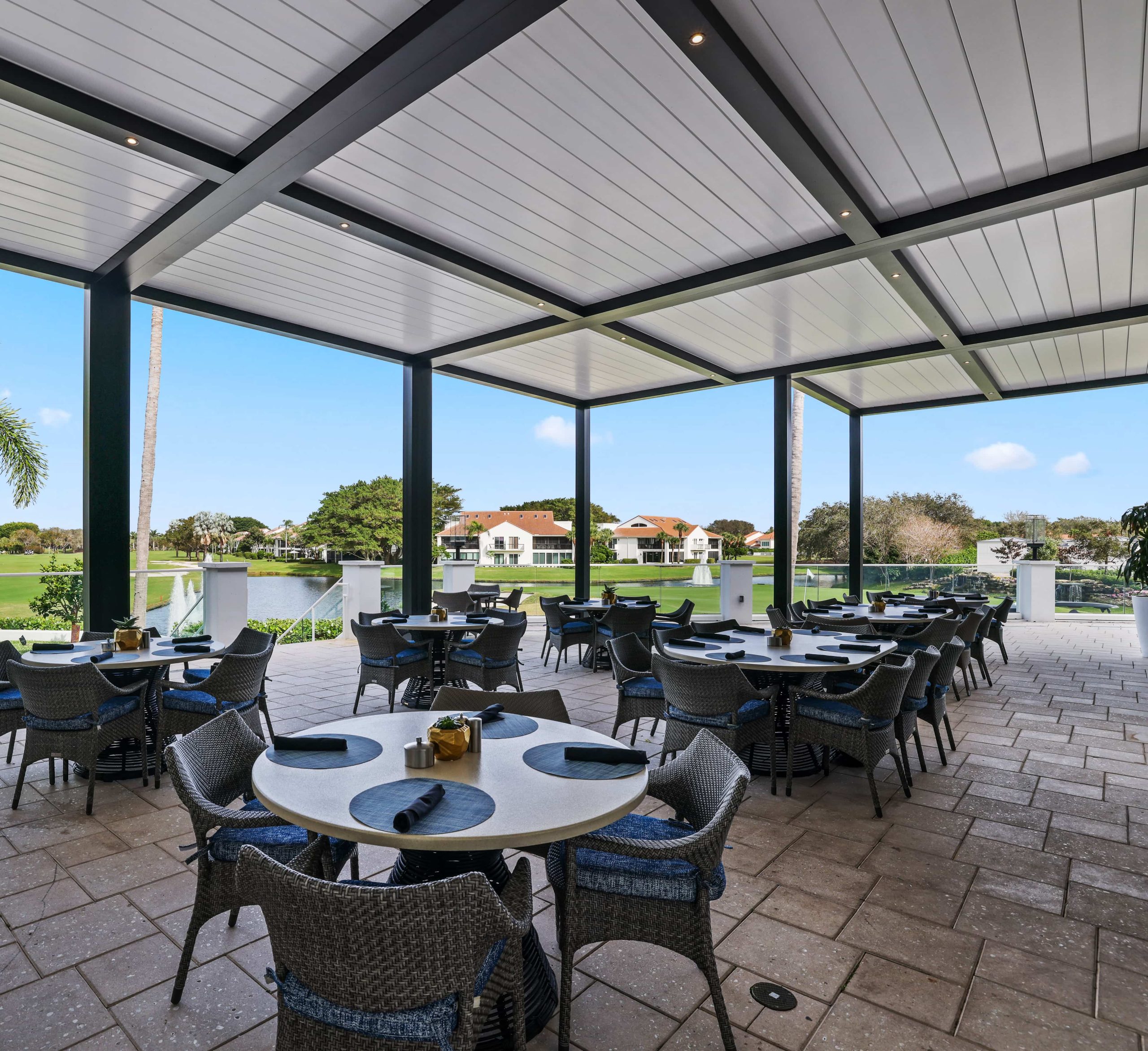
Choose this when the patio must feel like a dependable dining room extension.
Best-fit : R-SHADE™ insulated patio cover.
3) Performance + drainage (the “unsexy” spec that prevents
daily problems)
Restaurants don’t forgive “almost works.” You need rain behavior and exposure behavior to be planned—not guessed.
Checklist:
- Drainage path: where does water go? what is the collection point? where is discharge routed?
- Wind + snow requirements: confirm local requirements and specify to match.
- Attachment + anchoring: confirm substrate conditions early (slab, deck, rooftop membrane, etc.).
- Finish + longevity expectations: decide what “holds up” means for your exposure and cleaning realities.
If you need a drainage reference: How much slope should a pergola roof have to drain?
If owners ask “how long does this last?”: How long does a pergola last?
4) Rooftops + high exposure sites (short section, serious tone)
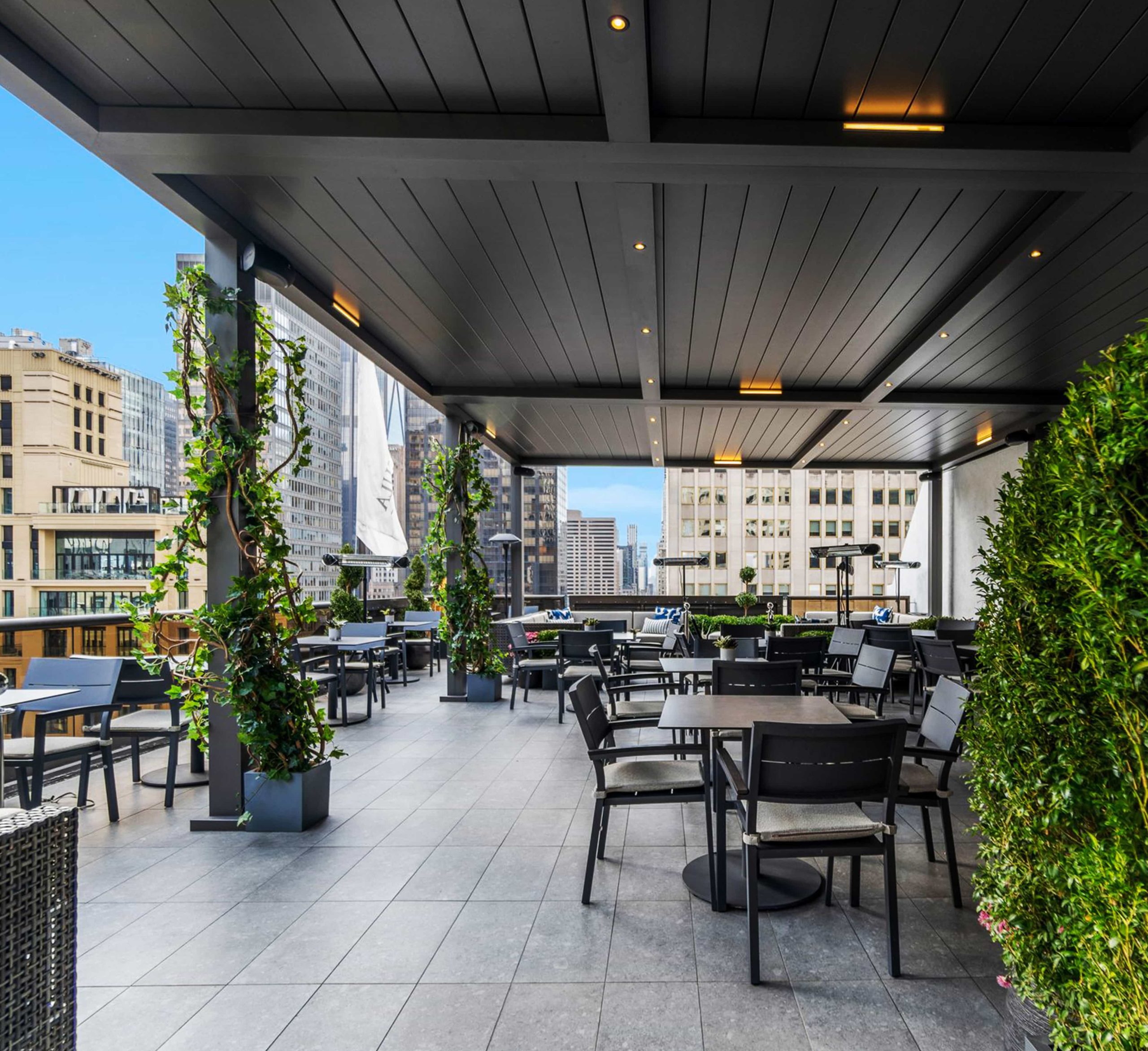
Rooftops win on vibe—but lose fast if you don’t spec the structure like a real build.
Rooftop checklist:
- Verify roof structure capacity and attachment strategy with the right professionals.
- Expect higher wind exposure and more aggressive weather swings.
- Prioritize drainage integration and day-to-night lighting control.
Planning reference: Rooftop deck options
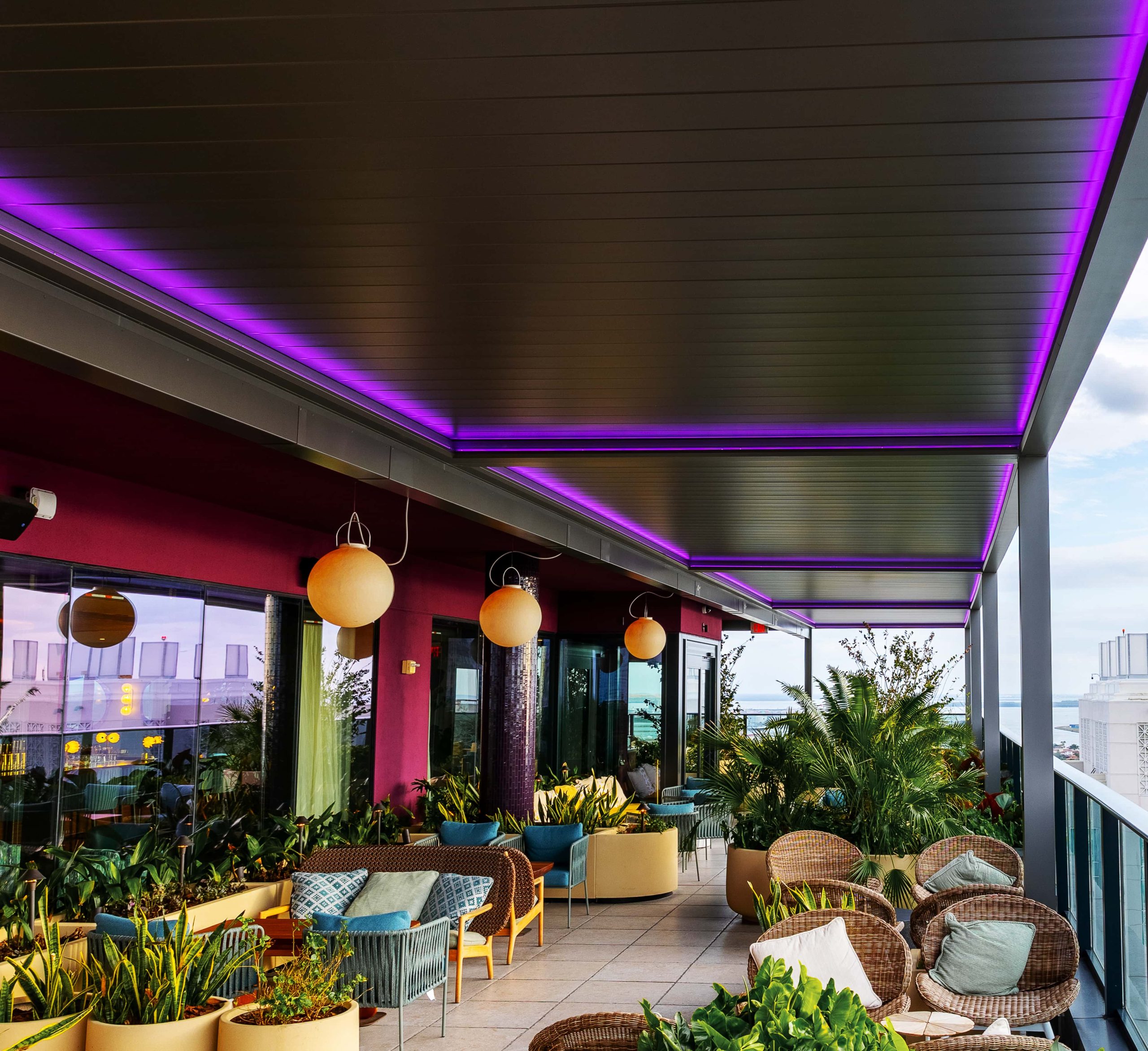
Hospitality example: Covered pool deck: hotel rooftop space
5) Comfort stack (what actually keeps guests seated)
Comfort upgrades aren’t “nice to have” in hospitality. They’re what keep outdoor seats bookable when conditions shift.
Comfort stack checklist:
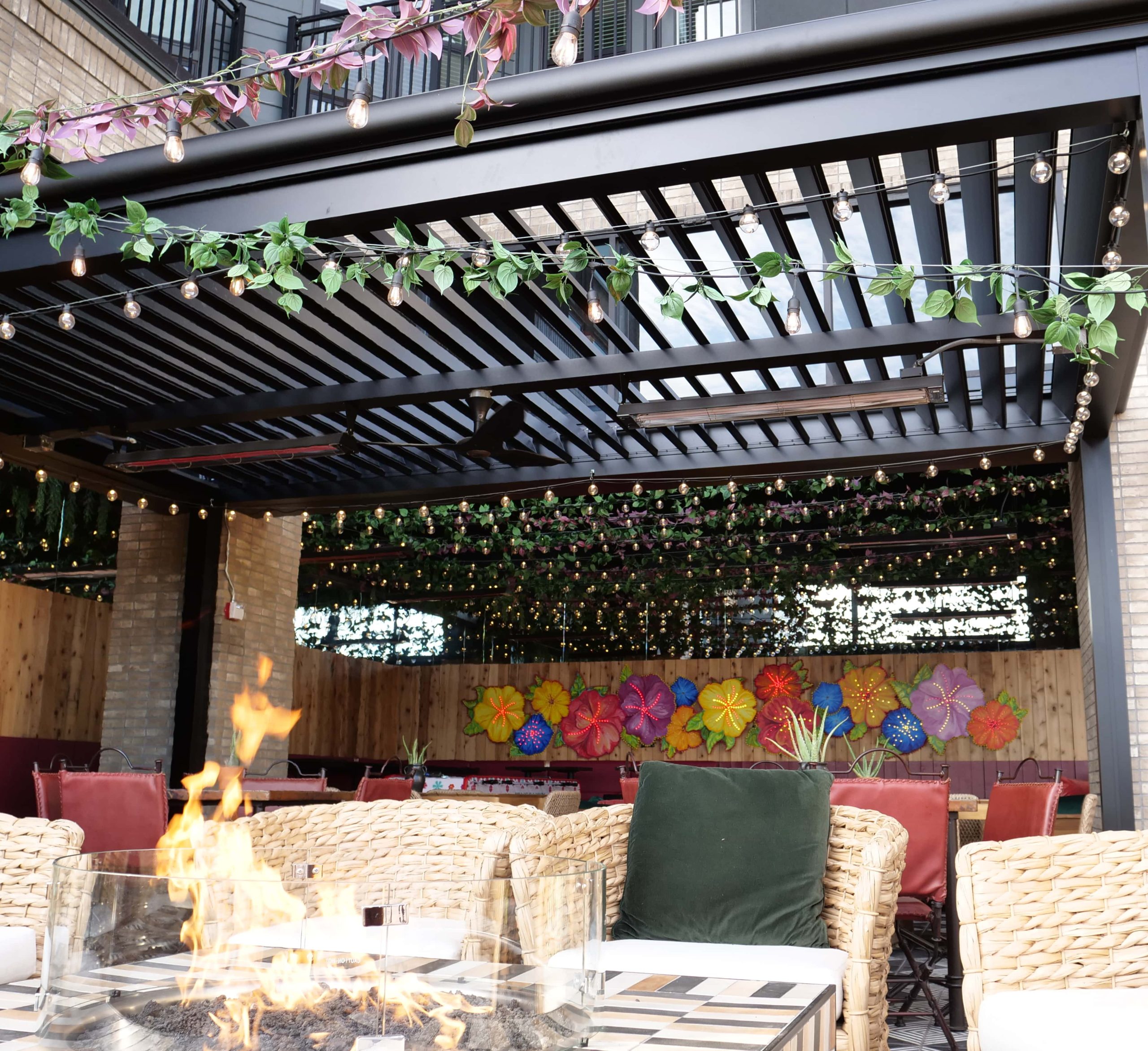
- Lighting: dimmable, layered, and designed for the time of day you make money (evening).
- Wind control: screens and enclosure strategy for exposed corners.
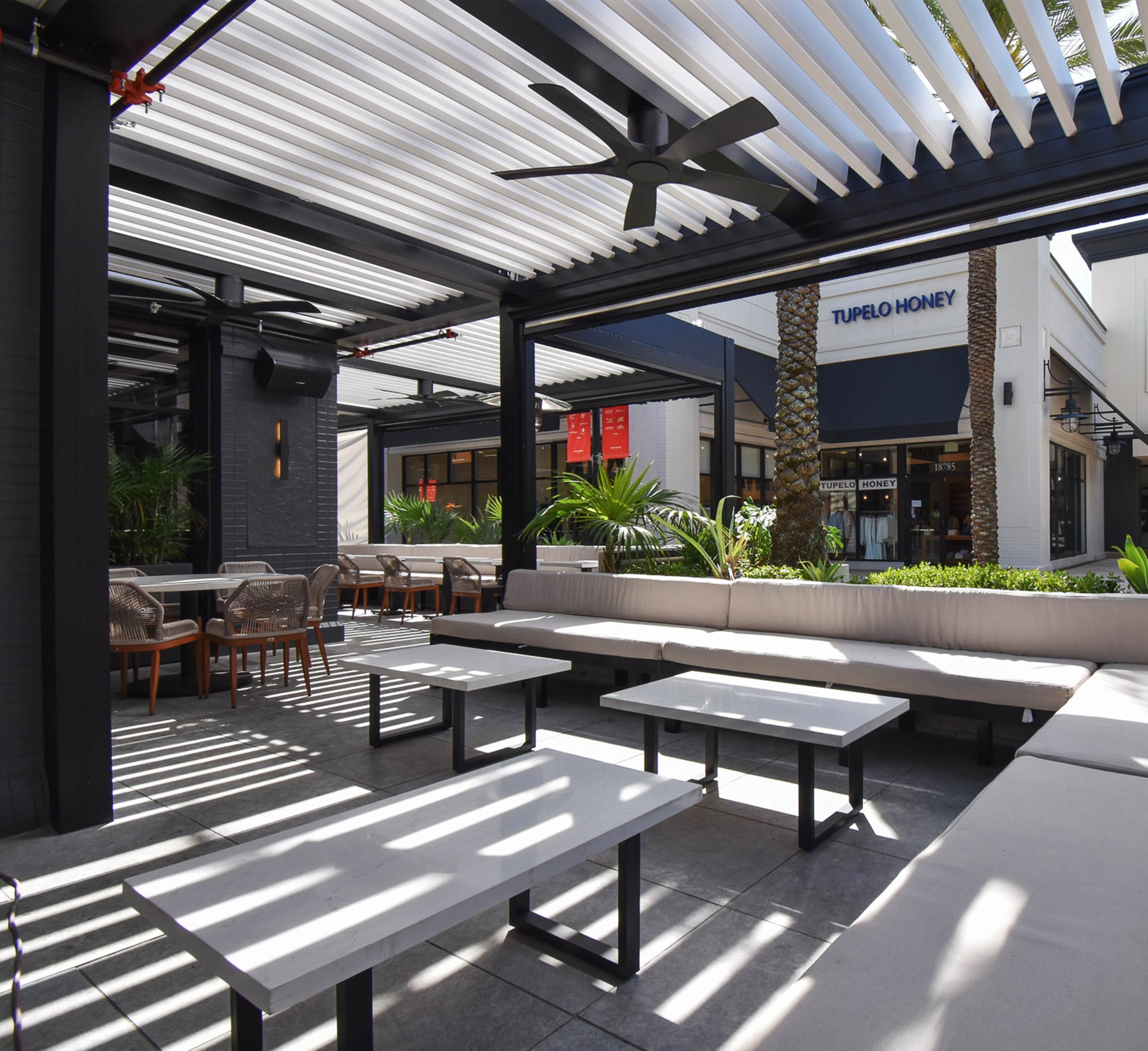
- Airflow: fans for hot climates; keep air moving without blasting guests.
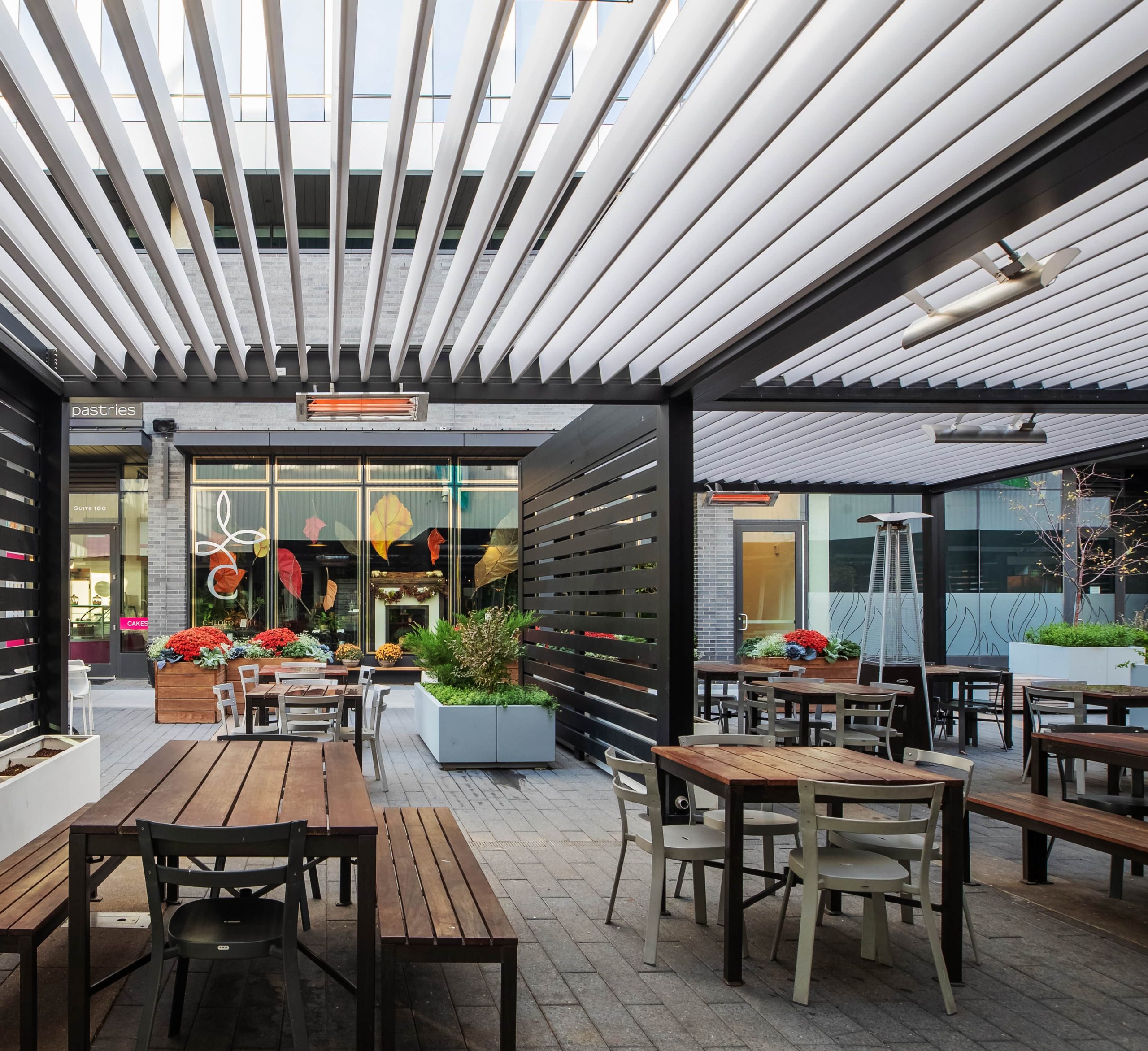
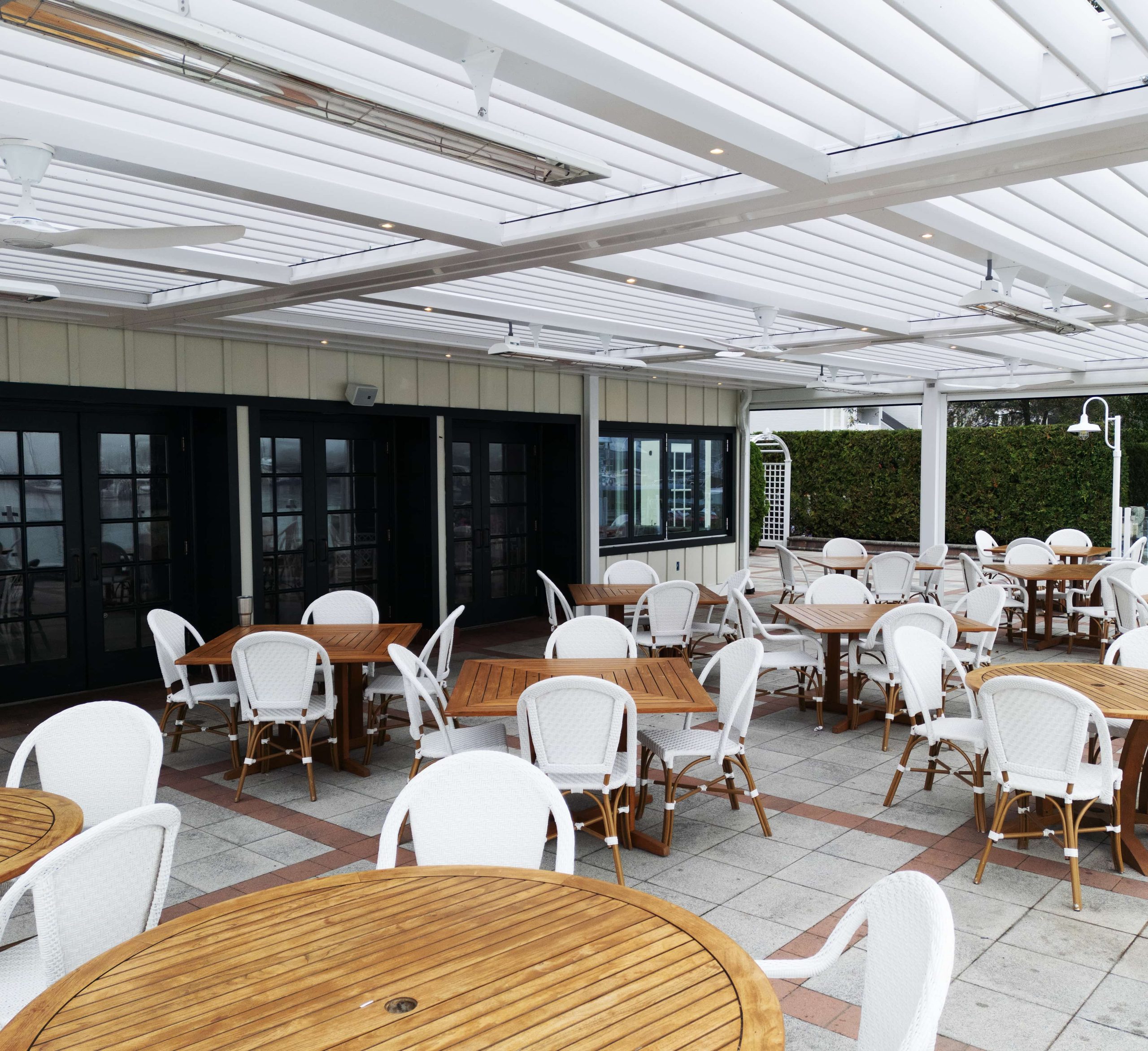
- Heat: controlled warmth for shoulder seasons and late-night dining.
- Privacy + acoustics: avoid turning the patio into a fishbowl or a noise amplifier.
Restaurant owner framing: 5 reasons to invest in a pergola for your restaurant patio.
6) Documents + coordination (specifier-ready)
If you’re working with an architect, GC, or owner’s rep, the project speeds up when deliverables are clear.
Ask for:
- Dimensioned layout + clear post locations
- Electrical plan (if motorized louvers, screens, lighting)
- Drainage plan
- Load requirements and how the system aligns
- Finish selections and maintenance expectations
Coordination reference: Pergola drawings: designer’s guide
Specifier resources: Custom pergolas for architects
7) Maintenance + serviceability (protect uptime)
If the pergola becomes the “problem child,” staff will avoid seating it.
Azenco Outdoor’s maintenance guidance is refreshingly practical:
- Disconnect power before maintenance (for motorized systems).
- Use a hose and avoid harsh cleaning approaches that can damage finishes.
- Clean with mild soap and a soft sponge; rinse thoroughly.
- Set a seasonal check routine (and assign an owner internally).
For a step-by-step routine your team can follow, use Azenco Outdoor’s pergola maintenance guide.
Operator note: Assign an owner for weekly wipe-downs, seasonal checks, and who calls for service if you’re using motorized louvers/screens.
Operations notes (what experienced operators care about)
These “small” decisions change nightly performance:
- Glare control: lunch service can be brutal if you don’t plan shade angles + wind screens.
- Reservation strategy: treat covered seats as premium inventory; avoid overbooking uncovered seats on volatile weather days.
- Cleaning and spill response: specify surfaces and layouts so bussing is fast and discreet.
- Staff controls: define who adjusts louvers/screens and when (don’t let it become a debate during rush).
- Noise + comfort: plan lighting and airflow so guests feel “held,” not exposed.
Fast stakeholder alignment: Azenco Outdoor Q&A.
FAQs