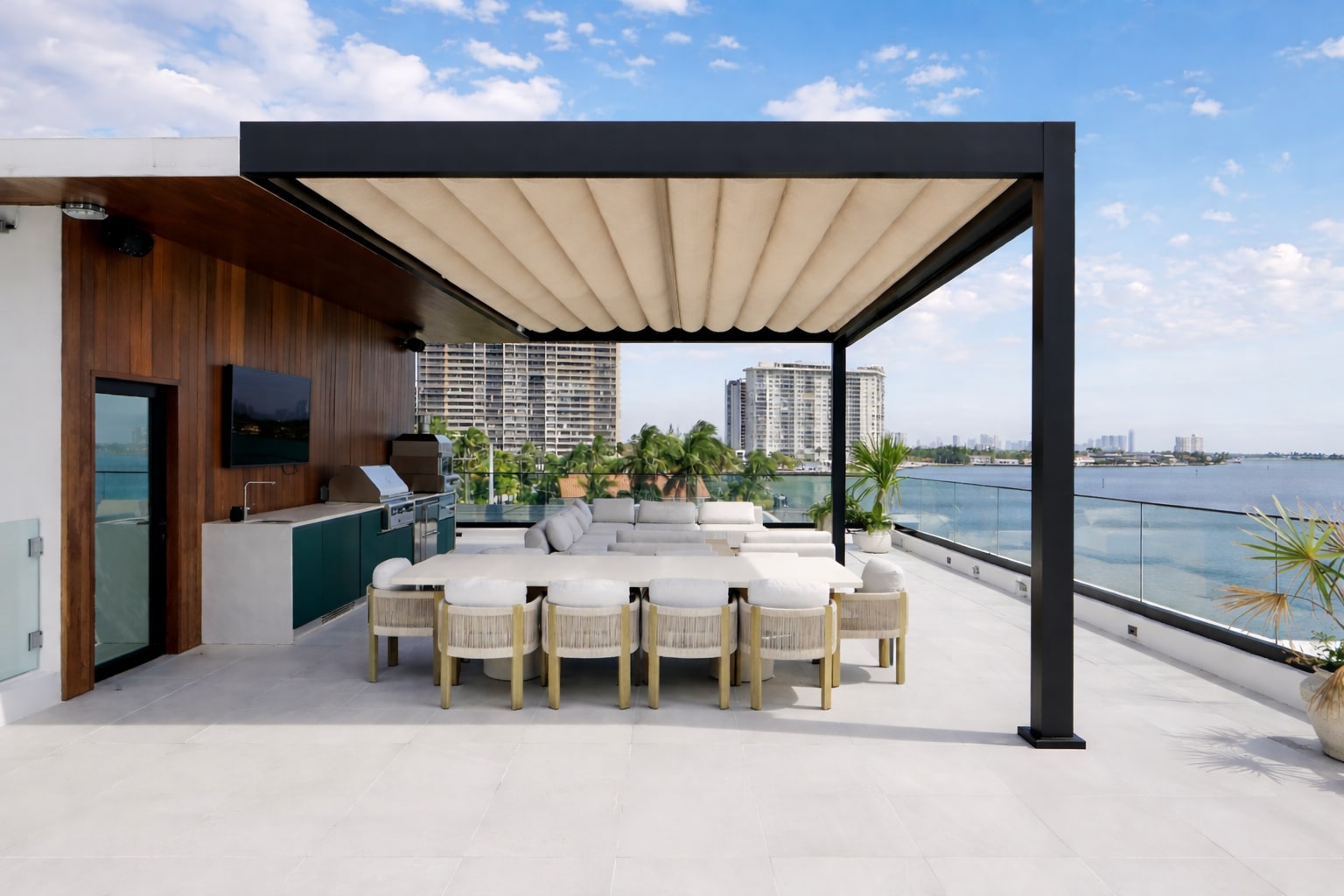
The best pergola orientation depends on how sunlight reaches your patio and when you plan to use it. East-facing patios usually need morning sun control, west-facing patios contend with low afternoon and evening sunlight, south-facing patios often receive longer exposure, and north-facing patios may benefit from preserving daylight. However, compass direction alone cannot determine the right design. Your location, seasons, surroundings, and preferred roof system matter too.
“Pergola orientation” can refer to several different design decisions, which is why one-size-fits-all advice is often misleading:
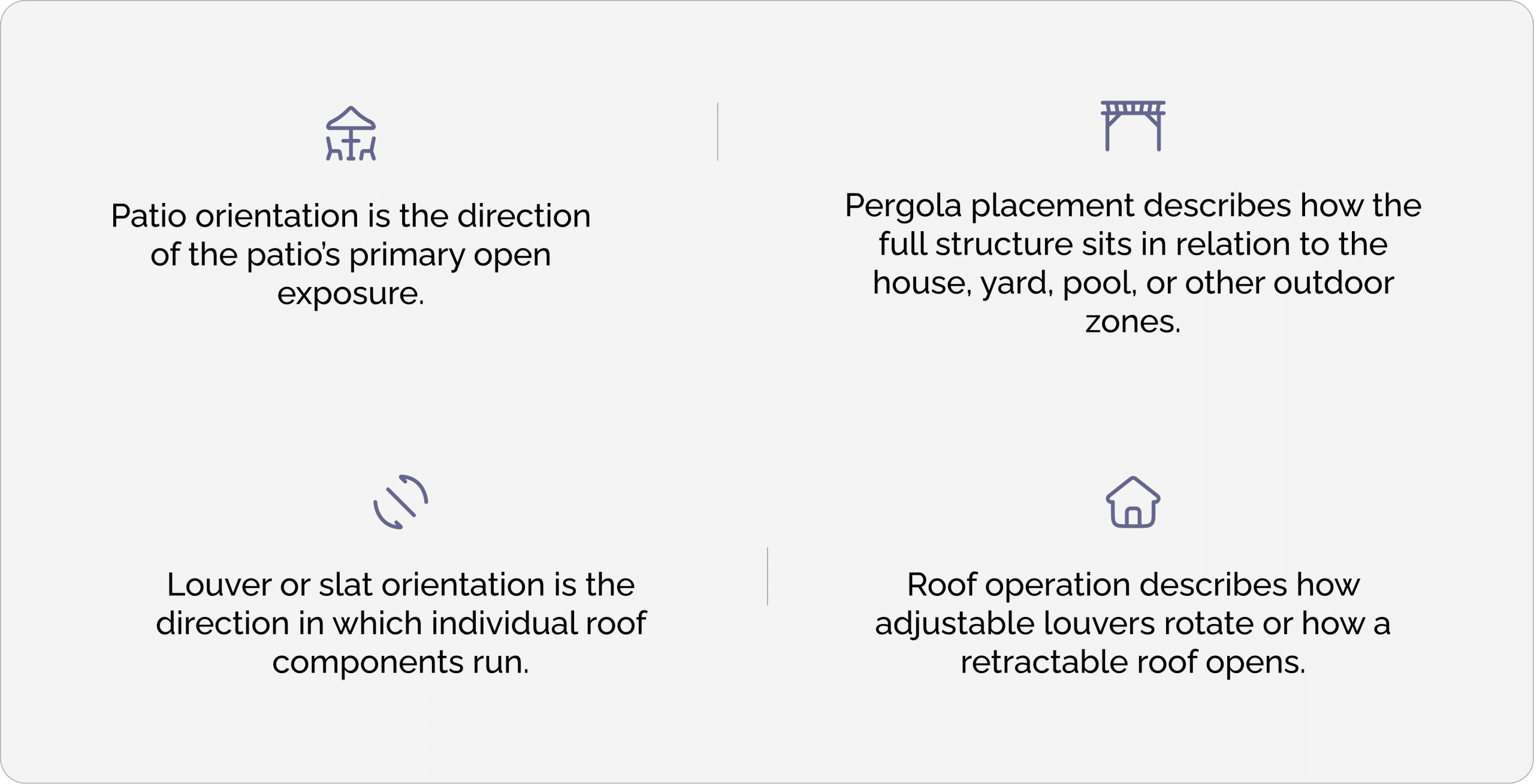
These decisions affect one another, but they are not interchangeable. An east-facing patio does not necessarily mean the home’s front façade faces east, nor does it automatically determine which way its louvers should run.
Roof construction also changes the result. See how different pergola designs provide shade for a broader comparison of roof types.
Before deciding which direction a pergola should face, consider five connected factors.
| Patio exposure | Typical sunlight pattern | Main challenge | Primary planning priority |
|---|---|---|---|
| East-facing | Direct morning light, with more shade often developing later | Early glare and heat without over-shading the rest of the day | Preserve useful daylight while controlling morning exposure |
| West-facing | Strong, low-angle afternoon and evening light | Heat and glare during common dining and entertaining hours | Combine overhead control with a strategy for side-entering sunlight |
| South-facing | Longer exposure in many US locations | Balancing summer shade with cooler-season sunlight | Build in seasonal flexibility and consider adjacent indoor daylight |
| North-facing | Softer indirect light for much of the day | Making an already shaded area too dark | Preserve brightness while adding only the coverage the space needs |
These patterns are starting points for Northern Hemisphere homes, not design prescriptions. Climate, latitude, architecture, vegetation, and local topography can change the result.
Our brochure is packed with inspiration, design options, and key details to help you make the right choice.
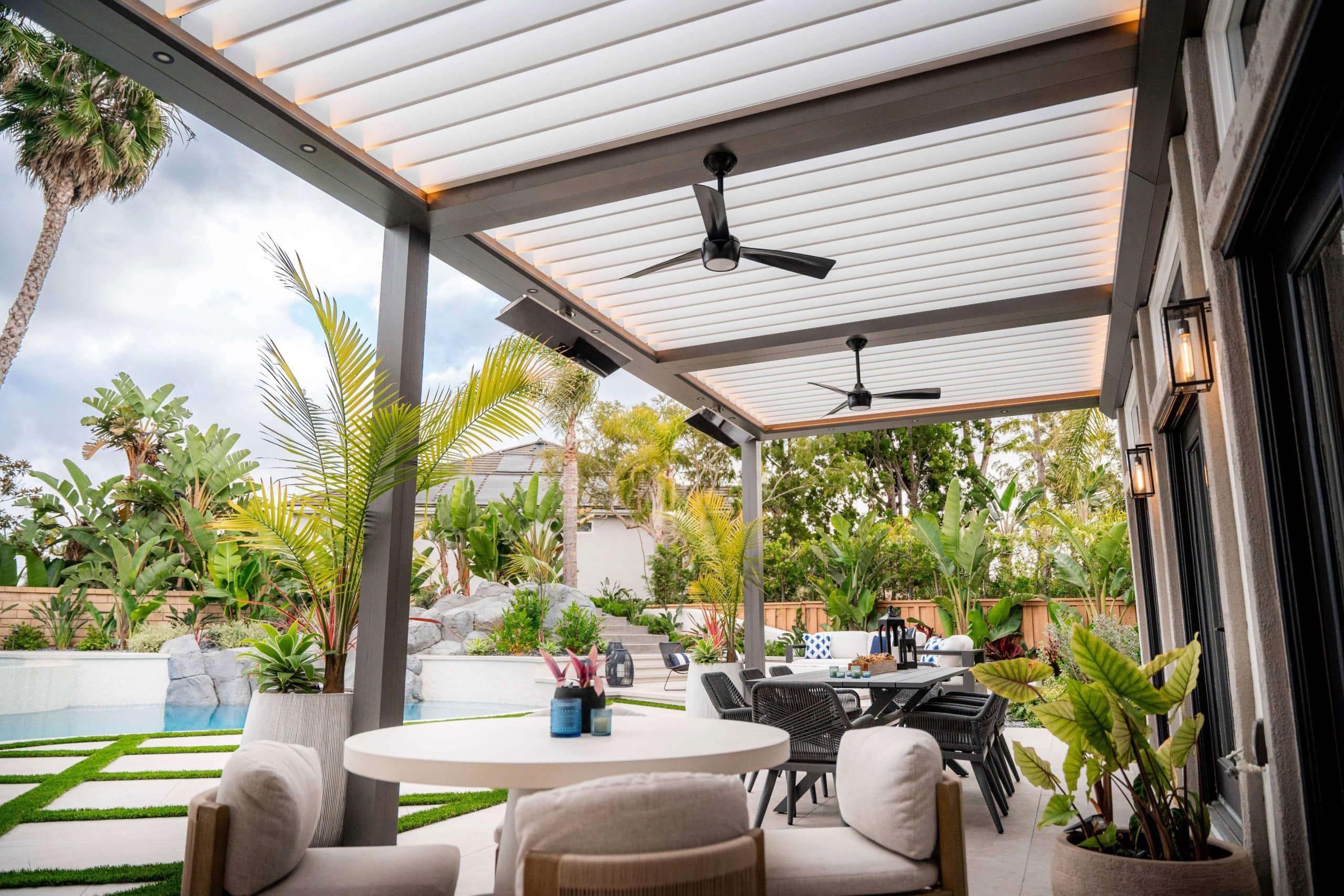
An east-facing patio is commonly brightest in the morning. That may suit breakfast or coffee, but direct light can create glare at the table or through nearby windows. Low morning sunlight may also enter beneath overhead coverage.
If the patio is attached to the eastern side of the home, the building may provide more shade later. Permanent maximum coverage could then make the patio or adjoining room darker than necessary.
Decide whether morning sunlight is an asset or the main discomfort. An adjustable or retractable roof can preserve useful light, while a fixed solution may suit homeowners who consistently prioritize coverage.
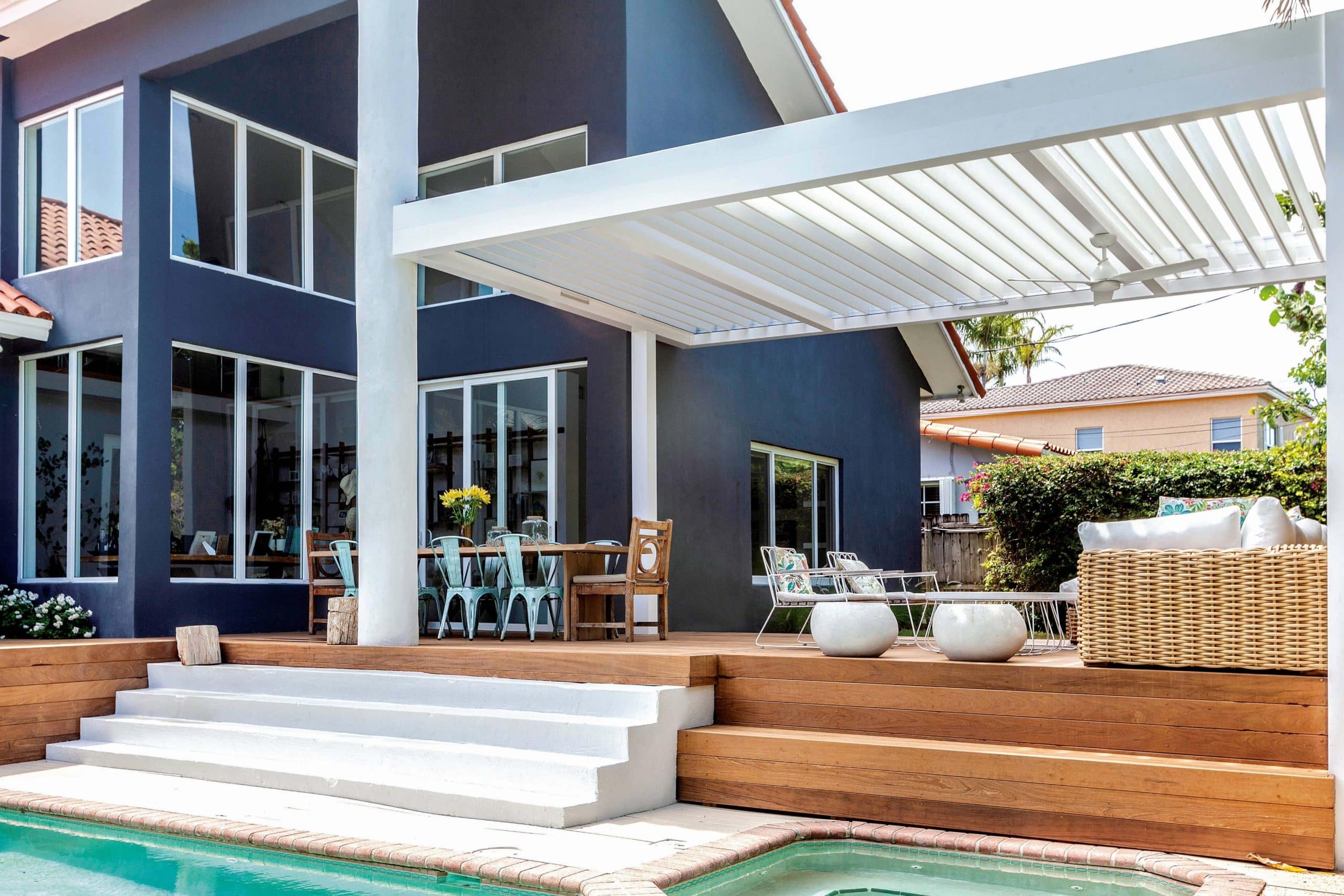
A west-facing patio can receive strong afternoon and evening sunlight when homeowners want to dine or entertain. Because the sun sits lower at those hours, an overhead roof may not intercept every ray entering from the open side.
DOE/NREL passive-design guidance explains that low-angle east and west sunlight is difficult to manage with horizontal overhangs alone and may require a vertical shading dimension. The guidance addresses buildings and glazing – not Azenco products—but the sun-angle principle is relevant to patio planning.
Observe the space during actual use hours. A pergola that works well at noon may leave seating exposed later. Depending on the layout, screens, walls, vegetation, or furniture placement may help manage side sunlight.
Azenco’s privacy options for pergolas include fixed walls, operable walls, and integrated screens. Adding side coverage can improve glare control but may also change airflow, views, and openness.
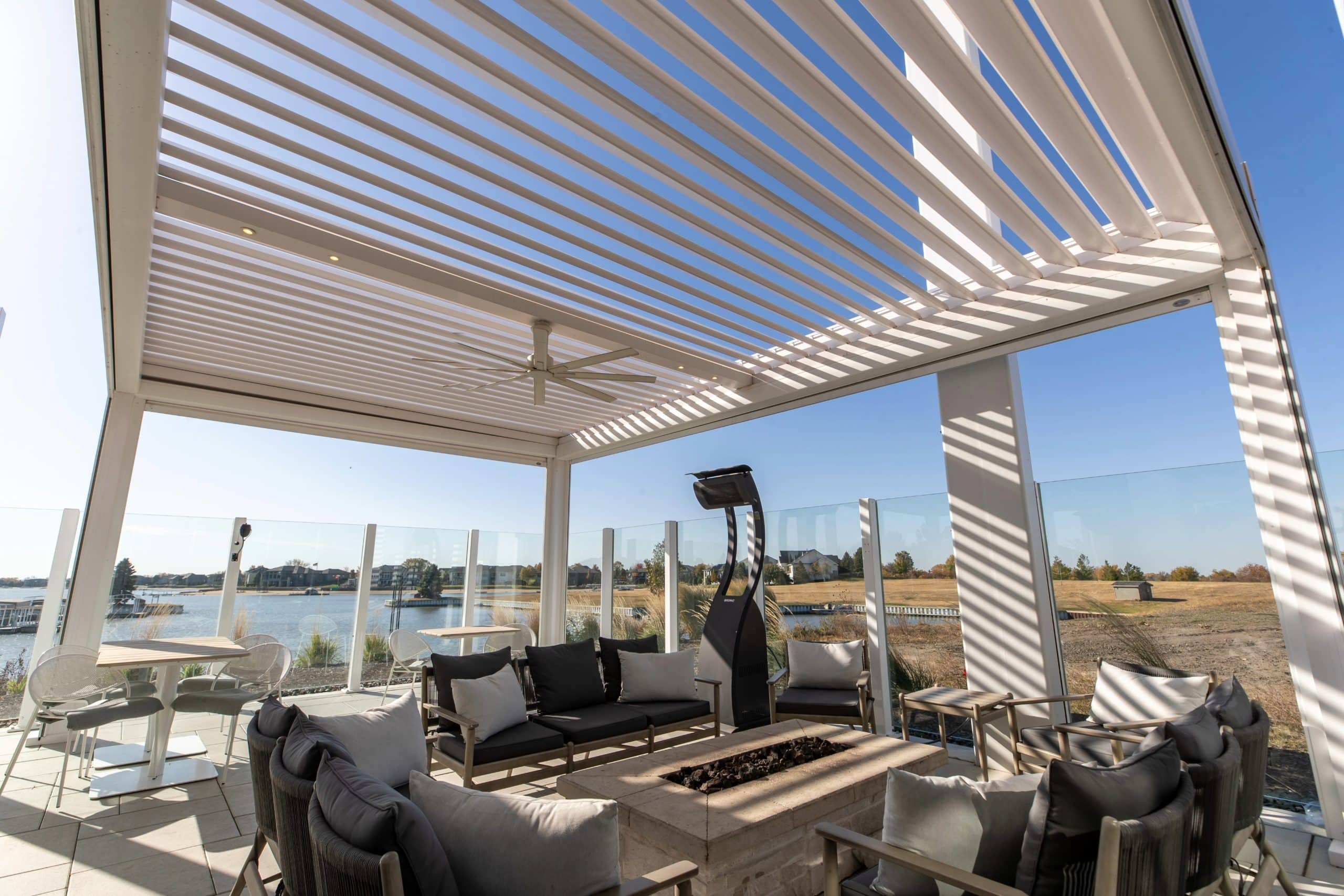
In many US locations, south-facing patios receive longer solar exposure. The summer sun generally travels higher, while winter sunlight reaches the site from a lower angle. A fixed shade pattern can therefore feel appropriate in one season and restrictive in another.
Adjustable louvers can change light, shade, and airflow, while a retractable roof can transition between open sky and coverage. A fixed roof may suit homeowners who consistently prioritize shade and weather protection.
Also consider adjoining rooms. A deep or permanently closed roof can reduce daylight through nearby doors and windows, so roof selection should account for both outdoor and indoor conditions.
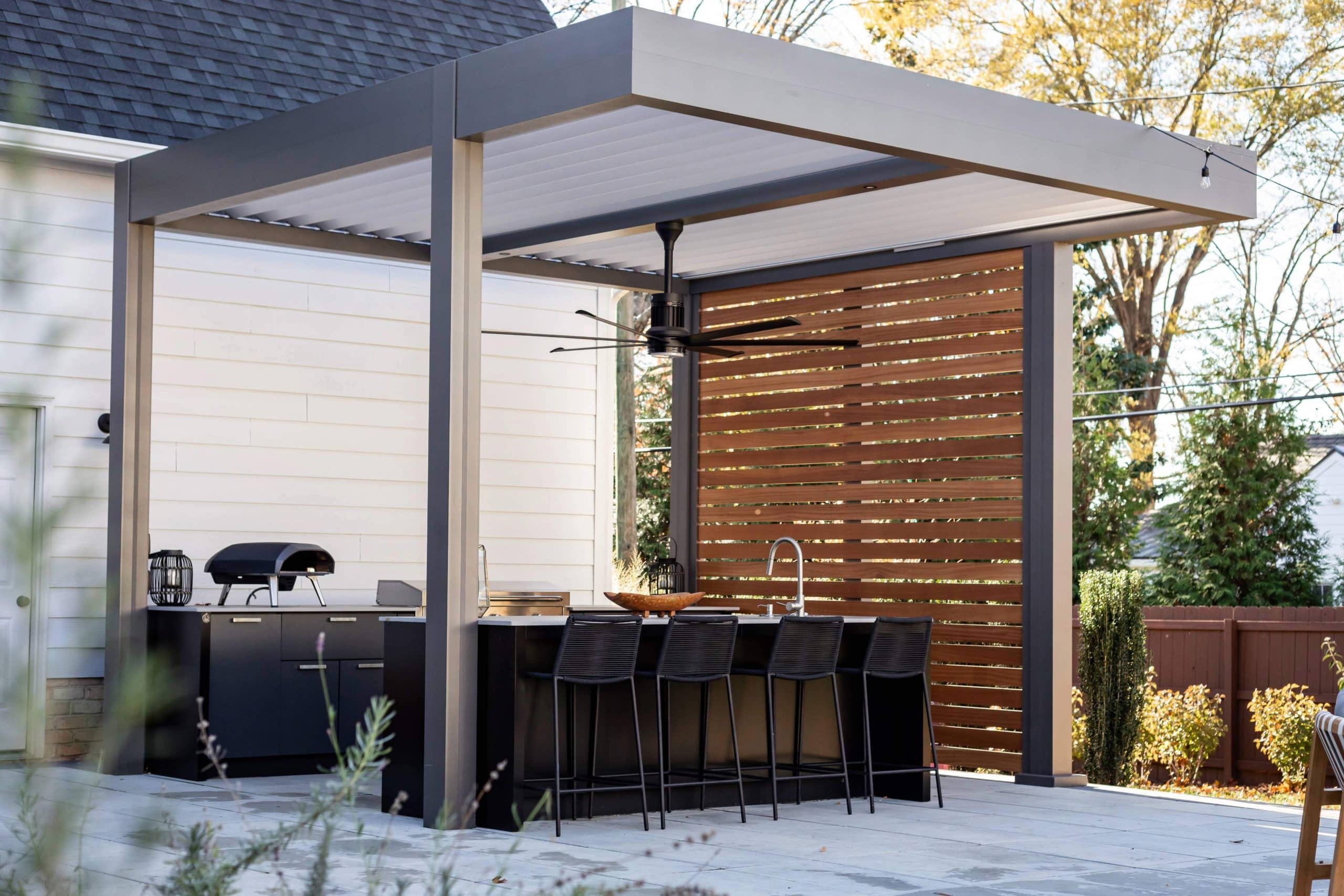
North-facing patios often receive softer, indirect light through much of the day in the Northern Hemisphere. They may already feel shaded, although direct light can still reach them at certain early or late hours.
The main risk is over-shading. A solid or continuously closed roof may darken the patio and adjoining room. A fixed cover may suit consistent rain-protection needs; an adjustable or retractable system can preserve daylight, airflow, and sky visibility when coverage is unnecessary.
The real objective may be weather protection, space definition, or outdoor-room functionality rather than direct midday-sun control.
Azenco offers several aluminum pergola options and patio-cover systems. The best fit depends on the type of control you want—not the compass direction alone.
| Azenco system | Roof type | Sun-control advantage | Important limitation | Best-fit homeowner priority |
|---|---|---|---|---|
| R-BLADE™ | Motorized rotating aluminum louvers | Adjusts sunlight, shade, and airflow as conditions change | Overhead louvers cannot eliminate every low-angle side-sun issue | Fine control throughout the day |
| R-WEAVE™ | Motorized retractable fabric roof | Retracts for open sky or extends for overhead shade and rain protection | Does not provide the same fine-angle control as rotating louvers | Complete open-or-covered flexibility with a fabric aesthetic |
| R-BREEZE™ | Fixed 55° or 90° slatted roof | Provides a defined balance of shade, filtered light, and airflow | Fixed slats cannot be repositioned after installation | Permanent architectural shade and openness |
| R-SHADE™ | Fixed insulated roof | Provides consistent overhead shade and weather protection | Cannot open to restore direct sunlight or sky views | Dependable, continuous coverage |
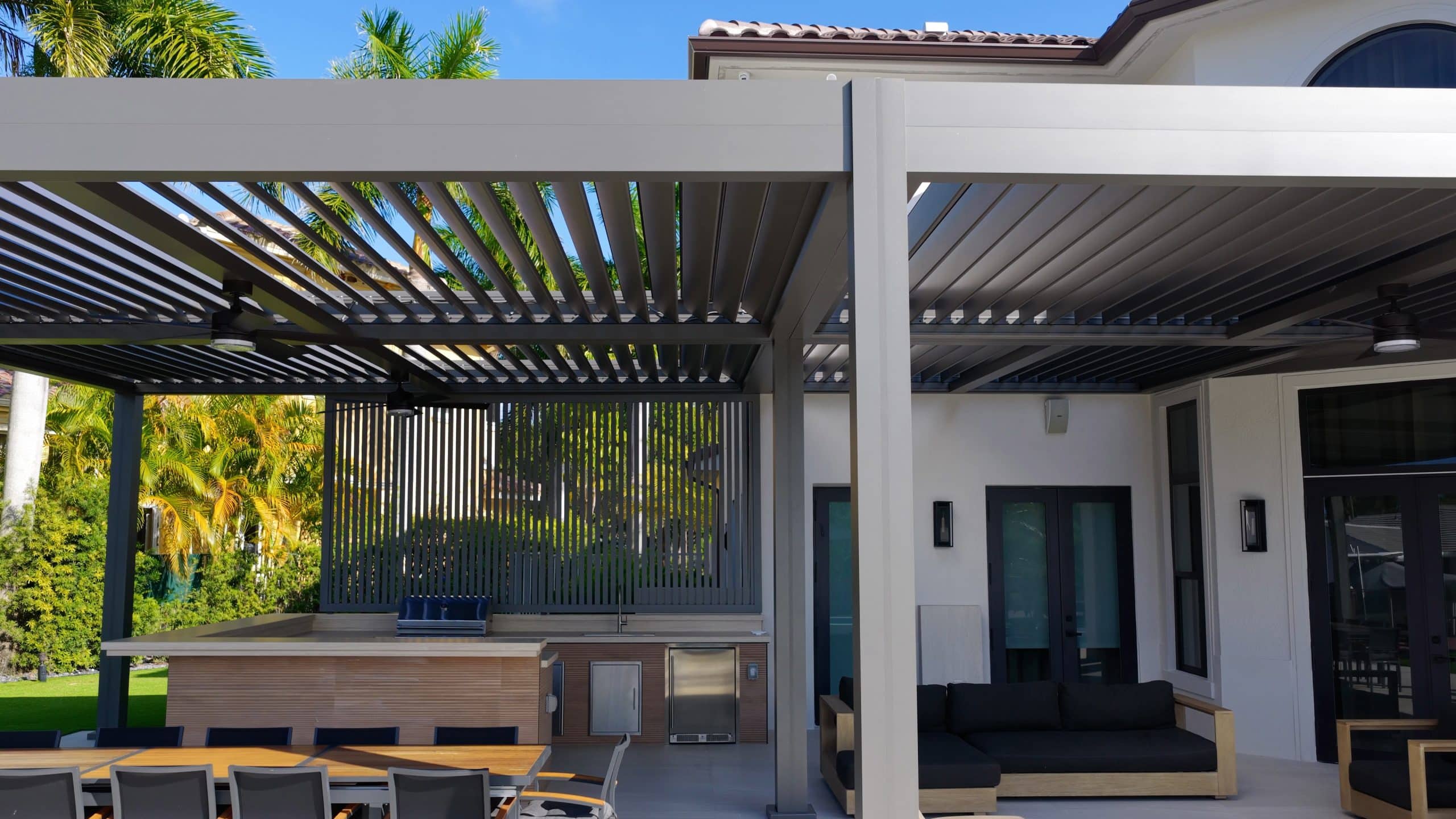
The motorized louvered pergola R-BLADE™ has aluminum louvers that rotate up to 90 degrees to adjust overhead light, shade, and airflow. Site planning remains necessary for low-angle sunlight.
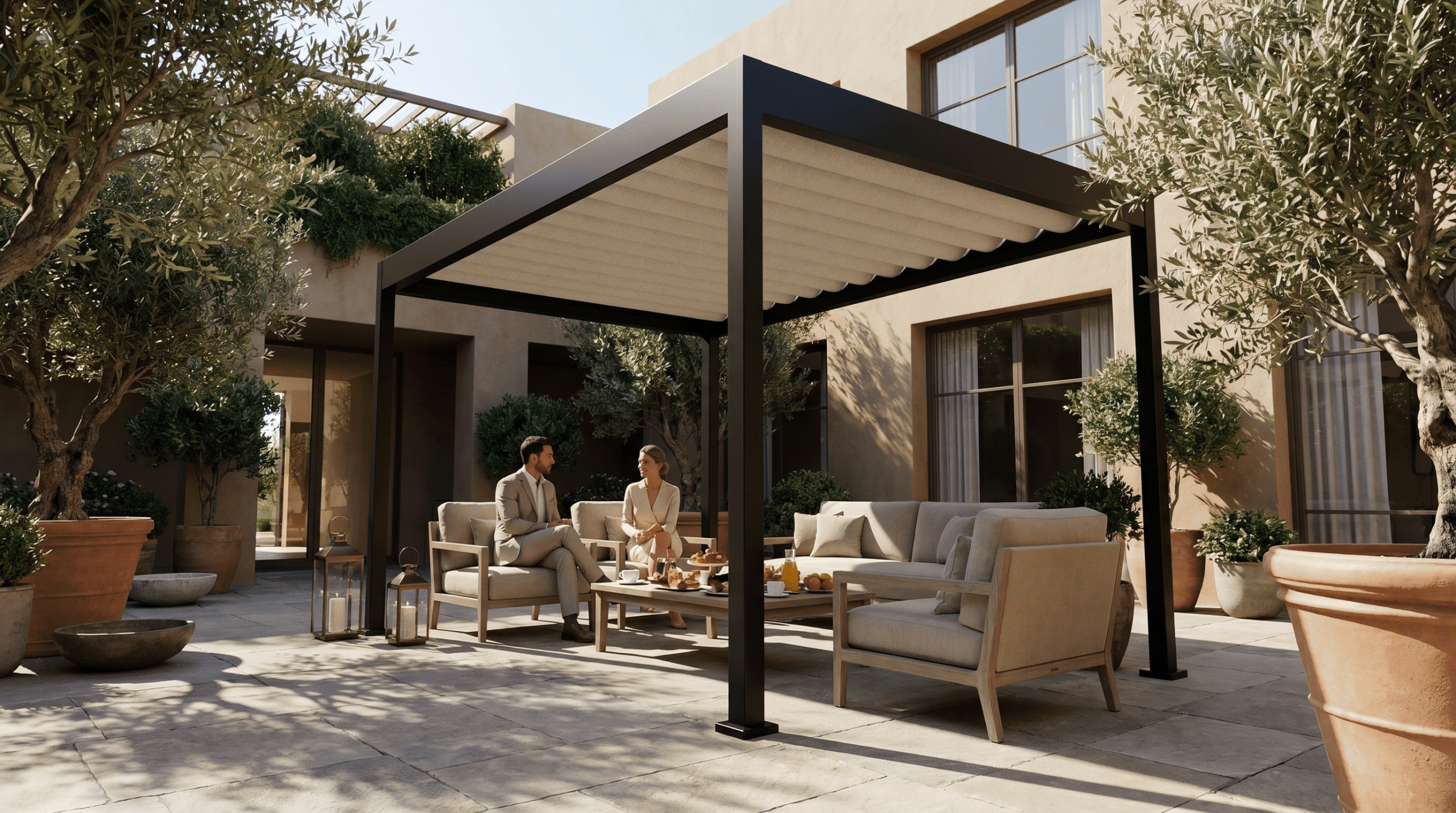
The retractable fabric pergola R-WEAVE™ has a waterproof upper fabric and optional decorative lower fabric. It retracts for open sky and extends for overhead shade and rain protection, offering a different experience from R-BLADE.
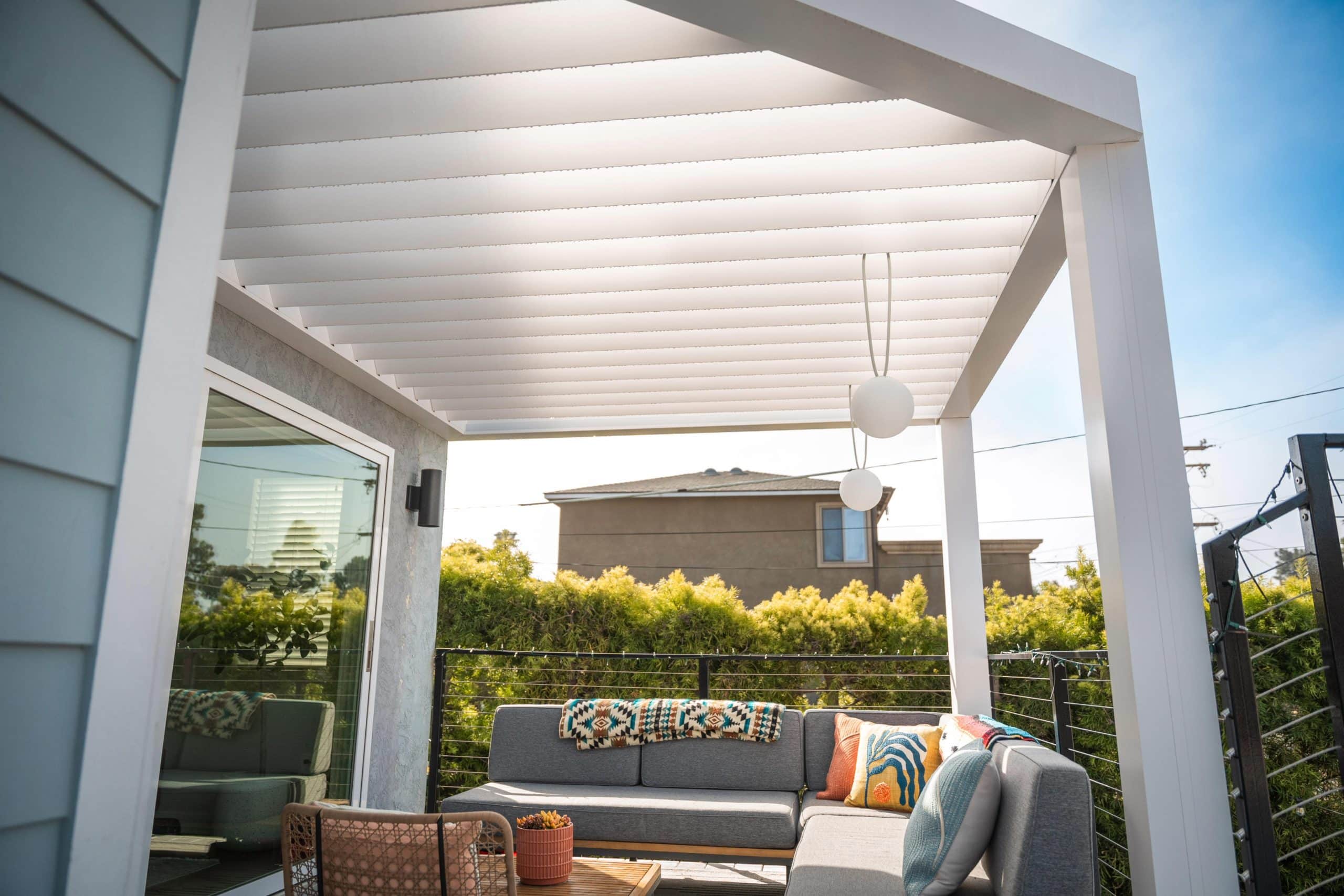
The fixed slatted roof pergola R-BREEZE™ comes in 55° and 90° editions. Because its slats do not rotate, orientation and the preferred balance of filtered light, airflow, shade, and privacy require advance planning.
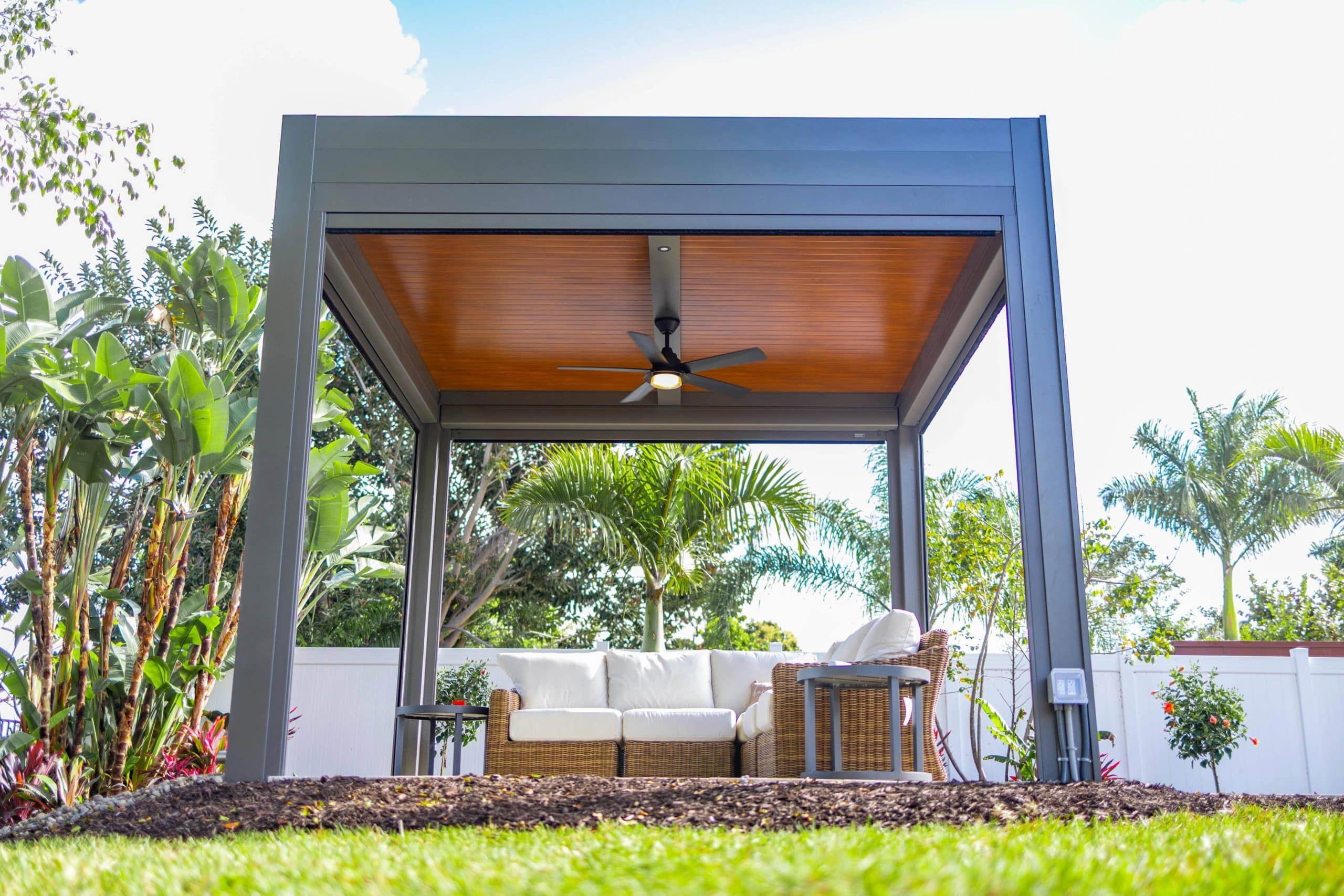
The insulated patio cover R-SHADE™ has a fixed roof for spaces where dependable coverage matters more than direct sunlight or an open sky.
A basic sun audit can make a dealer consultation more productive:
Trees and plants influence outdoor conditions through shade and natural cooling, as described in the EPA’s guidance on trees and vegetation. Consider seasonal leaf coverage, future growth, and maintenance.
If side shade, lighting, fans, or automation are priorities, review those pergola accessories during initial planning.
Avoid these common planning errors:
Tell us about your project, and our certified local dealer will provide a tailored quote with the best options—no commitment, just expert guidance.
The right pergola orientation begins with your routine, not a compass rule. Define when you use the patio and how much control you want over sunlight, shade, airflow, rain protection, and open-sky access. Then match those priorities to the site and roof system.
For project-specific guidance, find a pergola contractor near you and discuss how the patio’s exposure, surrounding conditions, and intended use should shape the design.
You should base pergola orientation on your patio’s exposure, primary use hours, seasonal sun path, and surrounding obstructions. We do not recommend a universal north–south or east–west rule because the same configuration can perform differently by location and site. Observe where sunlight enters, then select the placement and roof system that address your actual priorities.
Your pergola louvers should run in the direction determined by a site-specific evaluation, not a general compass rule. We consider the sun’s path, patio layout, nearby windows, preferred views, system requirements, and the hours you use the space. Adjustable louvers provide flexibility, but their final orientation still requires careful planning.
You can control sunlight on a west-facing patio by combining appropriate overhead coverage with a plan for low-angle side sunlight. We recommend observing the patio during late-afternoon and evening use. Depending on the layout, adjustable coverage, integrated screens, privacy walls, landscaping, or strategic furniture placement may help while preserving airflow and views.
Your north-facing patio may benefit from a pergola even if maximum shade is not the main goal. We recommend first identifying whether you need rain protection, space definition, privacy, or greater year-round usability. If preserving daylight matters, an adjustable or retractable roof may offer more flexibility than continuous fixed coverage.
You should choose R-BLADE when you prefer rotating aluminum louvers for fine control of overhead sunlight, shade, and airflow. Choose R-WEAVE when you prefer a retractable fabric roof that transitions between open sky and extended coverage. We evaluate them as different outdoor experiences rather than treating either system as universally better.
Yes, a pergola can reduce daylight in the adjoining room, particularly when the structure is deep, fixed, or frequently closed. We recommend assessing nearby windows and doors during the design process. An adjustable or retractable roof may help preserve light when coverage is unnecessary, but the result depends on the home, site, season, and roof configuration.